
Trained Scaffolder
Build Securely. Inspect Carefully. Work Safely.
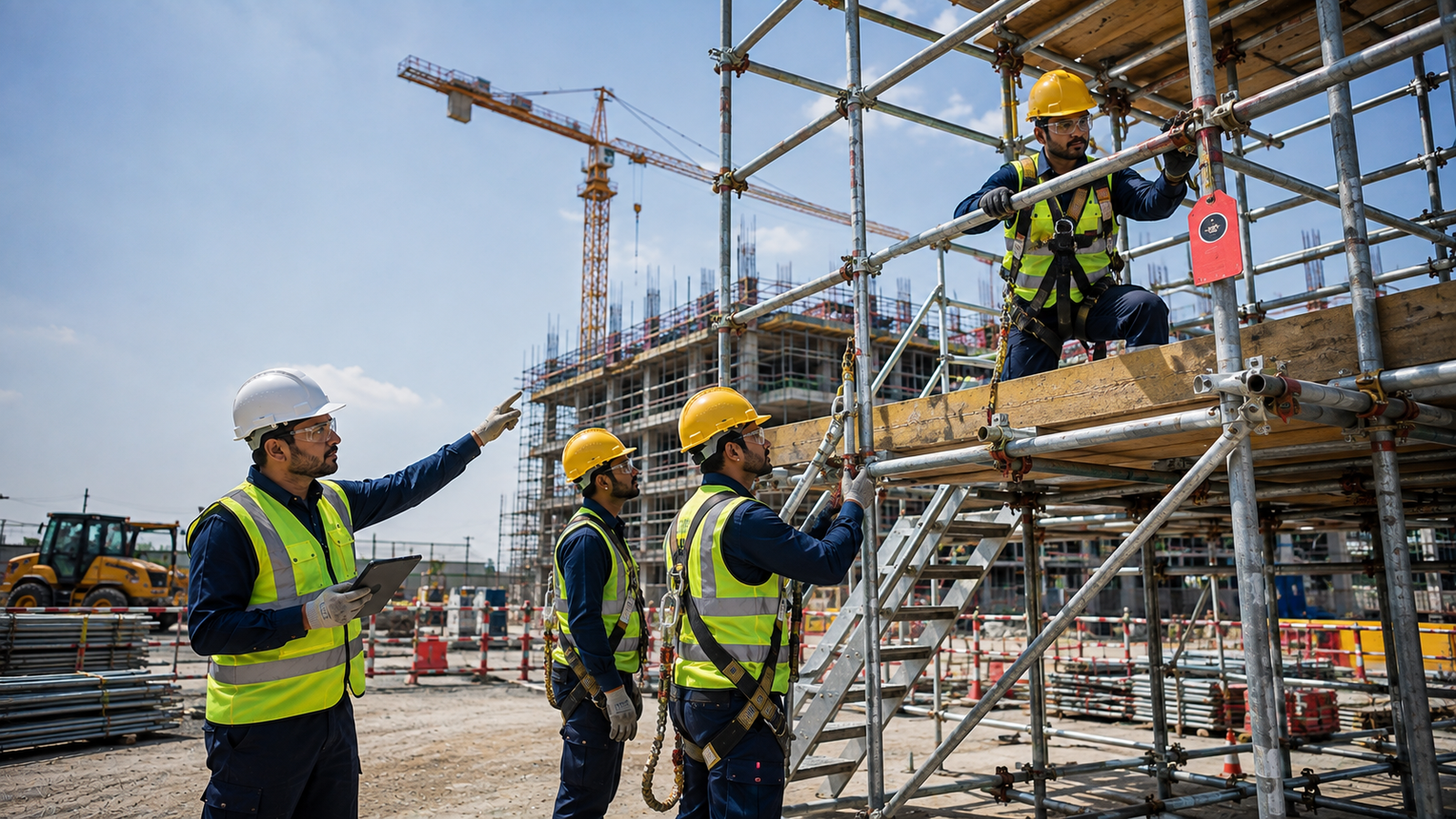
The Trained Scaffolder Course provides essential knowledge, practical awareness, and safety skills for personnel involved in scaffold erection, inspection, use, modification, and dismantling.
The training covers scaffold components, stability, safe access, working platforms, fall protection, inspection, and safe working practices.
01. What You’ll Learn
01. Scaffold Components
Common scaffold components and fittings
Working platforms and access systems
Supporting and protective structures
02. Safe Erection
Basic scaffold erection principles
Approved procedures and site requirements
Safe working practices during erection
03. Stability & Load Awareness
Basic scaffold stability principles
Safe loading and material storage
Support, bracing, and overloading awareness
04. Safe Access & Platforms
Safe access and egress
Working platform requirements
Guardrails, toe boards, and protective arrangements
05. Fall Protection
Common fall hazards
Fall-prevention measures
Basic fall-protection awareness
06. Scaffold Inspection
Basic visual inspection requirements
Identification of unsafe conditions
Reporting defects and deficiencies
02. Key Training Areas
01. Types of scaffolding
02. Scaffold components and fittings
03. Basic scaffold configuration
04. Safe erection procedures
05. Scaffold modification awareness
06. Safe access and egress
07. Guardrails and toe boards
08. Load capacity and material storage
09. Scaffold inspection
10. Identification of unsafe conditions
11. Work-at-height safety
12. Fall prevention and protection
13. Weather and environmental considerations
14. Scaffold housekeeping
15. Safe dismantling procedures
16. Inspection and reporting practices
03. Practical Scaffolding Training
Learn by Building. Inspect by Thinking. Work Safely.
01. Identify Components
Recognise common scaffold components, fittings, platforms, access systems, and protective elements.
02. Prepare the Work Area
Understand the importance of suitable foundations, safe access, clear work areas, and proper materials.
03. Erect Safely
Learn the basic sequence and safety considerations involved in scaffold erection under competent supervision.
04. Secure & Stabilise
Understand the importance of supports, bracing, ties, and protection against movement.
05. Inspect
Identify visible defects, missing components, unsafe access, and inadequate protection.
06. Use Safely
Follow safe practices while using scaffold platforms and access systems.
07. Dismantle Safely
Understand the principles of controlled and systematic scaffold dismantling.
04. Scaffold Inspection
Before You Climb, Check the Scaffold.
Participants learn to identify:
01. Missing or damaged components
02. Unstable or inadequate foundations
03. Incomplete working platforms
04. Missing guardrails or toe boards
05. Unsafe access arrangements
06. Inadequate bracing or support
07. Excessive or poorly distributed loads
08. Unauthorised modifications
09. Damaged boards or platforms
10. Unsafe working conditions
11. Changes caused by weather or site activities
If It Isn’t Safe — Don’t Use It. Report It.
05. Load & Stability Awareness
01. Scaffold Capacity
Understand that scaffolds must only be used within their designed and approved loading limits.
02. Material Storage
Avoid excessive or poorly distributed materials on working platforms.
03. Stability
Understand the importance of proper support, bracing, ties, and structural integrity.
04. Occupancy
Ensure platforms are used according to their intended capacity and site requirements.
06. Learning Outcomes
After completing the course, participants will be able to:
01. Identify common scaffold components and their functions.
02. Understand basic scaffold erection principles.
03. Recognise common scaffold-related hazards.
04. Understand the importance of stable foundations and structural support.
05. Follow safe access and working-platform practices.
06. Recognise fall hazards and protective measures.
07. Understand basic scaffold loading considerations.
08. Conduct basic visual safety checks within their level of training.
09. Identify and report unsafe scaffold conditions.
10. Follow safe practices for scaffold modification and dismantling.
11. Maintain safe working practices around scaffolding.
07. Who Can Attend?
01. Scaffolders
02. Scaffolding Supervisors
03. Construction Workers
04. Site Supervisors
05. Safety Officers
06. Foremen
07. Contractors
08. Maintenance Personnel
09. Work-at-Height Personnel
10. Construction Trainees
08. Training Approach
Learn → Demonstrate → Practise → Inspect → Evaluate
The course combines essential knowledge with practical demonstrations, hands-on exercises, scaffold inspection activities, and hazard-identification exercises.
Practical activities should be carried out using appropriate equipment and under competent supervision.
09. Scaffolding Safety Cycle
A Safe Approach From Ground to Platform
01. Plan
Understand the work requirements, scaffold type, location, and applicable site procedures.
↓
02. Prepare
Check the work area, materials, foundation, access, and required safety equipment.
↓
03. Erect
Construct the scaffold according to approved methods and safety requirements.
↓
04. Inspect
Check the completed scaffold and identify defects or unsafe conditions.
↓
05. Use
Use the scaffold only as intended and follow safe working practices.
↓
06. Monitor
Check for changes, damage, weather effects, or unauthorised modifications.
↓
07. Dismantle
Dismantle the scaffold systematically following approved procedures.
10. Key Benefits
01. For Scaffolders
Develop practical knowledge, hazard awareness, and safer scaffolding practices.
02. For Supervisors
Improve inspection awareness, scaffold monitoring, and work-at-height safety.
03. For Organisations
Support safer scaffolding operations and strengthen overall construction-site safety.
11. Why Scaffolder Training Matters
Poorly erected, modified, inspected, or used scaffolds can create serious workplace risks.
Proper training helps personnel understand scaffold hazards, follow safe procedures, identify unsafe conditions, and work responsibly at height.
Safe Scaffolding Starts With Trained People.
Trained Scaffolder
Build Right. Inspect Carefully. Work Safely.