Industrial Safety Management
Lead With Safety. Prevent Risks. Build a Safer Workplace.
The Industrial Safety Management Course provides essential knowledge and practical awareness for managing workplace health and safety in industrial environments.
Participants learn hazard identification, risk assessment, safety inspections, incident investigation, emergency preparedness, safety leadership and continuous improvement.
1. What You’ll Learn
1.1 Hazard Identification
Physical and mechanical hazards
Electrical and chemical hazards
Fire and environmental hazards
Ergonomic and workplace hazards
1.2 Risk Assessment & Control
Hazard evaluation
Risk assessment principles
Control measures
Monitoring and improvement
1.3 Safety Management Systems
Safety policies and procedures
Inspections and audits
Permit-to-work systems
Documentation and reporting
1.4 Safety Leadership
Safety communication
Employee participation
Workplace observation
Promoting safe behaviour
1.5 Emergency Preparedness
Emergency planning
Evacuation procedures
Response coordination
Emergency drills
1.6 Incident Prevention & Investigation
Incident and near-miss reporting
Evidence collection
Root-cause analysis
Corrective and preventive actions
2. Key Training Areas
Workplace hazard identification
Risk assessment and control
Hierarchy of controls
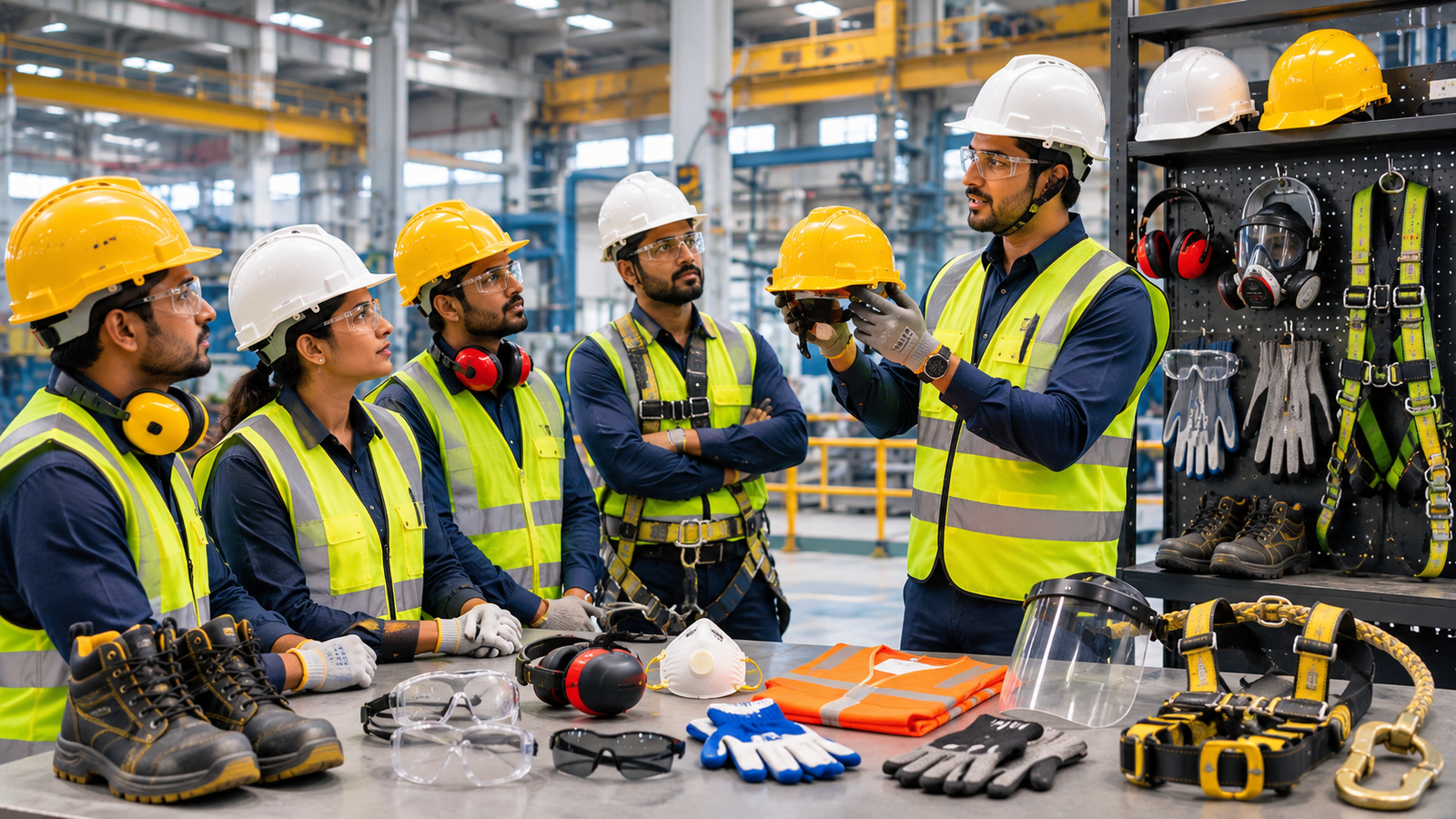
PPE management
Machine and equipment safety
Electrical safety
Fire prevention
Chemical safety awareness
Work-at-height safety
Manual handling and ergonomics
Workplace housekeeping
Material handling and lifting safety
Permit-to-work systems
Lockout/Tagout awareness
Emergency response planning
Safety communication
Incident and near-miss reporting
Accident investigation
Workplace safety inspections
Safety audits
Corrective and preventive actions
3. Practical Safety Management
Identify. Assess. Control. Improve.
3.1 Workplace Inspection
Identify unsafe conditions
Identify unsafe acts
Check equipment and work areas
Assess housekeeping and access
3.2 Risk Assessment
Identify workplace hazards
Assess potential consequences
Determine suitable control measures
3.3 Safety Controls
Understand the use of:
Engineering controls
Administrative controls
Safe work procedures
Personal protective equipment
3.4 Safety Observation
Identify unsafe behaviours
Observe workplace conditions
Encourage safer work practices
3.5 Incident Investigation
Gather relevant information
Identify contributing factors
Determine causes
Recommend corrective actions
3.6 Emergency Preparedness
Review emergency scenarios
Understand evacuation arrangements
Confirm communication and response procedures
3.7 Continuous Improvement
Use inspections, observations, incidents, audits and feedback to improve safety performance.
4. Hierarchy of Safety Controls
Control the Hazard at Its Source
01. ELIMINATION
Remove the hazard where reasonably practicable.
02. SUBSTITUTION
Replace the hazard with a safer alternative where possible.
03. ENGINEERING CONTROLS
Use physical or technical measures to separate people from hazards.
04. ADMINISTRATIVE CONTROLS
Use procedures, training, supervision, signage and safe work practices.
05. PPE
Use appropriate personal protective equipment for remaining risks.
The Most Effective Safety Approach Controls Hazards Before They Reach the Worker.
5. Workplace Safety Inspection
See the Risk Before It Becomes an Incident
Inspect areas such as:
Work and production areas
Machinery and equipment
Electrical installations
Housekeeping standards
Walkways and access routes
PPE compliance
Fire-protection arrangements
Work-at-height activities
Material handling operations
Chemical storage and handling
Emergency exits and evacuation routes
Safety signage and procedures
6. Risk Assessment Process
Identify → Assess → Control → Monitor → Improve
01. IDENTIFY
What hazards are present?
02. ASSESS
Who could be affected and what could happen?
03. CONTROL
What measures can eliminate or reduce the risk?
04. MONITOR
Are the controls effective and being followed?
05. IMPROVE
What further actions can reduce the risk?
7. Emergency Preparedness
Be Ready Before the Emergency Happens
7.1 Emergency Communication
Understand alarms, reporting methods and emergency communication.
7.2 Evacuation
Review evacuation routes, assembly areas and emergency responsibilities.
7.3 Fire Response
Understand fire prevention, fire equipment and appropriate initial response.
7.4 First Aid
Understand the role of trained first-aid personnel and emergency medical support.
7.5 Emergency Teams
Understand coordination between employees, supervisors, security and emergency-response personnel.
7.6 Hazardous Situations
Develop awareness of chemical releases, spills, equipment failures and other workplace emergencies.
8. Incident & Accident Investigation
Understand Why It Happened. Prevent It From Happening Again.
Participants learn about:
Incident and near-miss reporting
Evidence collection
Witness information
Timeline development
Immediate causes
Underlying causes
Root-cause analysis
Corrective actions
Preventive actions
Follow-up and effectiveness checks
The Objective Is Prevention and Improvement — Not Blame.
9. Safety Leadership
Safety Starts With Leadership
Effective safety leaders should:
01. LISTEN
Encourage employees to report hazards and concerns.
02. COMMUNICATE
Clearly explain safety expectations and workplace risks.
03. OBSERVE
Identify unsafe conditions and behaviours.
04. ENGAGE
Involve employees in safety discussions and improvement activities.
05. ACT
Take timely action when hazards are identified.
06. IMPROVE
Use lessons learned to strengthen workplace safety.
10. Learning Outcomes
After completing the course, participants will be able to:
Understand fundamental industrial safety-management principles.
Identify common workplace hazards.
Conduct basic workplace safety inspections.
Understand risk-assessment and risk-control principles.
Apply the hierarchy of controls.
Understand basic PPE management.
Recognise machine, electrical, fire and chemical hazards.
Support permit-to-work and safe-work procedures.
Understand emergency-preparedness requirements.
Participate in incident and near-miss investigations.
Identify immediate, underlying and root causes.
Recommend corrective and preventive actions.
Promote positive safety behaviour.
Improve safety communication and employee participation.
Support continuous improvement of safety performance.
11. Who Should Attend?
Suitable for:
Safety Officers
HSE Professionals
Industrial Supervisors
Site Managers
Factory Managers
Engineers
Production Managers
Maintenance Managers
Foremen
Team Leaders
HR & Administration Personnel
Contractors
Safety Committee Members
Industrial Workers
12. Training Approach
Learn → Identify → Assess → Control → Lead → Improve
The programme combines:
01. Classroom Learning
Core industrial safety concepts and management principles.
02. Case Studies
Workplace scenarios and incident-prevention examples.
03. Inspection Exercises
Hazard identification and workplace observation.
04. Risk Assessment Activities
Practical evaluation of workplace hazards and controls.
05. Emergency Scenarios
Preparedness and response discussions.
06. Interactive Activities
Team-based problem-solving and safety decision-making.
13. Safety Performance Improvement
Measure Safety. Learn From It. Improve It.
A proactive safety-management system uses:
01. INSPECTIONS
Identify workplace hazards and deficiencies.
02. SAFETY OBSERVATIONS
Monitor workplace conditions and behaviours.
03. NEAR-MISS REPORTS
Learn from events before they become serious incidents.
04. INCIDENT DATA
Identify trends and recurring risks.
05. AUDITS
Evaluate the effectiveness of safety systems.
06. CORRECTIVE ACTIONS
Address deficiencies and verify improvement.
14. Key Benefits
For Workers
Improve hazard awareness, safety knowledge and confidence in reporting unsafe conditions.
For Supervisors
Strengthen workplace monitoring, risk control, communication and safety leadership.
For Managers
Develop a structured approach to managing workplace safety and improving performance.
For Organisations
Support accident prevention, stronger safety practices and continuous workplace improvement.
15. Why Industrial Safety Management Matters
Industrial workplaces involve people, machinery, equipment, materials, chemicals, energy sources and changing operational conditions.
Effective safety management brings these elements together through:
Planning
Hazard identification
Risk control
Communication
Training
Monitoring
Continuous improvement
Safe Operations. Strong Leadership. Sustainable Safety Culture.
Industrial Safety Management
Practical Workplace Safety Management Training
Develop the knowledge, leadership skills and practical awareness required to identify risks, manage workplace safety and build a proactive safety culture.