
Fire Safety Audit
Identify Fire Risks. Strengthen Protection. Prevent Loss.
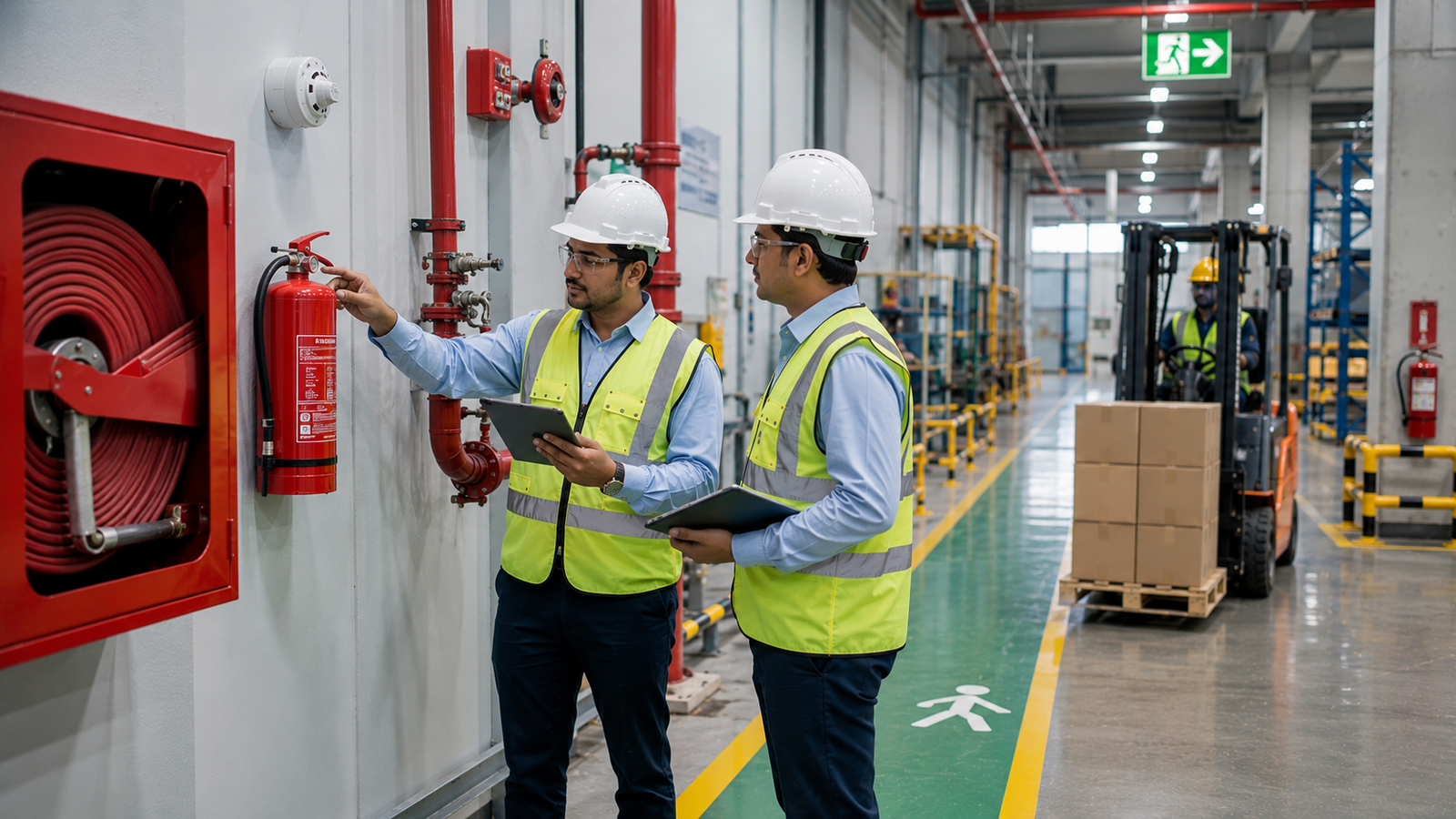
A Fire Safety Audit is a systematic assessment of a workplace or facility to identify fire hazards, evaluate existing fire safety measures, and recommend practical improvements.
The audit reviews fire prevention, firefighting systems, emergency preparedness, evacuation arrangements, electrical risks, storage practices, and employee awareness.
1. What We Assess
1.1 Fire Hazards
Identify conditions, materials, and activities that may increase fire risk.
1.2 Firefighting Systems
Review the suitability, condition, accessibility, and readiness of firefighting equipment.
1.3 Emergency Preparedness
Assess emergency procedures, evacuation arrangements, communication, and response readiness.
1.4 Means of Escape
Review emergency exits, escape routes, signage, lighting, and accessibility.
1.5 Ignition Sources
Identify potential risks from electrical equipment, hot work, machinery, and open flames.
1.6 Employee Awareness
Assess awareness of fire prevention, evacuation, and emergency procedures.
2. Areas Covered During the Audit
- Fire prevention measures
- Fire extinguishers
- Fire hydrant systems
- Fire pumps and water supply
- Fire alarm and detection systems
- Sprinkler systems
- Emergency exits and escape routes
- Emergency lighting and signage
- Electrical fire hazards
- Flammable material storage
- Hot work activities
- Storage and housekeeping
- Production and work areas
- Emergency response arrangements
- Firefighting preparedness
- Employee awareness
- Fire safety documentation
3. Fire Extinguisher Assessment
The assessment includes:
- Location and accessibility
- Suitability for identified fire risks
- Physical condition
- Correct placement and signage
- Inspection and maintenance records
- Obstructions and accessibility
- General readiness
Fire extinguishers must be suitable, accessible, and properly maintained.
4. Fire Alarm and Detection Assessment
The audit may review:
- Fire alarm panels
- Smoke and heat detectors
- Manual call points
- Audible and visual alarms
- System condition
- Detector accessibility
- Testing arrangements
- Maintenance records
- Emergency communication
Early detection supports faster evacuation and emergency response.
5. Fire Hydrant and Protection Systems
Where applicable, the audit may cover:
- Fire hydrants
- Hose reels
- Fire water tanks
- Fire pumps
- Pump rooms
- Sprinkler systems
- Valves and pressure arrangements
- System accessibility
- Signage
- Inspection and maintenance records
6. Electrical Fire Risk Assessment
Potential risks may include:
- Damaged cables
- Overloaded circuits
- Improper or loose connections
- Temporary wiring
- Unsafe extension arrangements
- Electrical panel hazards
- Equipment overheating
- Poor cable management
- Unauthorised modifications
- Poor housekeeping around electrical equipment
Electrical risks should be identified before they become ignition sources.
7. Hot Work Safety
The audit may review activities such as welding, cutting, grinding, brazing, and other heat-producing work.
Key areas include:
- Hot work permits
- Work-area preparation
- Control of combustible materials
- Availability of firefighting equipment
- Gas-cylinder arrangements
- Spark containment
- Fire watch requirements
- Post-work monitoring
- Emergency arrangements
8. Storage and Housekeeping
The assessment may identify:
- Accumulation of combustible materials
- Blocked fire exits
- Obstructed firefighting equipment
- Improper waste storage
- Unsafe stacking
- Poor material segregation
- Improper flammable-material storage
- Combustible materials near ignition sources
- Uncontrolled storage areas
Good housekeeping is an important part of fire prevention.
9. Flammable and Hazardous Material Storage
The audit may review:
- Identification and labelling
- Storage locations
- Material segregation
- Container condition
- Spill containment
- Ignition-source control
- Ventilation where required
- Quantity control
- Emergency arrangements
- Relevant safety documentation
10. Emergency Exit and Evacuation Assessment
Key areas include:
- Clear exit access
- Usable escape routes
- Emergency exit signage
- Emergency lighting
- Obstruction-free pathways
- Assembly arrangements
- Emergency communication
Every person should have a clear and accessible route to safety.
11. Emergency Preparedness Review
The review may include:
- Emergency response plans
- Evacuation procedures
- Emergency contact information
- Fire warden arrangements
- Emergency communication
- Assembly points
- Fire drills
- Employee awareness
- Visitor and contractor arrangements
- Emergency responsibilities
12. Fire Drill and Evacuation Readiness
A typical review may consider:
01. Alert → 02. Evacuate → 03. Account → 04. Assemble → 05. Coordinate → 06. Review
The focus is on effective communication, safe evacuation, accountability, emergency roles, and improvement actions.
13. Documentation Review
Relevant documents may include:
- Fire safety procedures
- Emergency response plans
- Fire drill records
- Fire extinguisher inspection records
- Fire system maintenance records
- Fire alarm testing records
- Fire pump testing records
- Training records
- Hot work permits
- Electrical inspection records
- Previous audit reports
- Corrective-action records
14. Audit Methodology
Inspect → Identify → Evaluate → Recommend → Improve
01. Document Review
Review relevant procedures, records, and previous findings.
02. Site Inspection
Conduct a systematic inspection of the facility.
03. Hazard Identification
Identify fire hazards and weaknesses in existing controls.
04. System Review
Assess applicable prevention, detection, protection, and emergency systems.
05. Risk Evaluation
Prioritise findings based on significance and urgency.
06. Recommendations
Provide practical corrective and preventive actions.
07. Audit Report
Prepare a structured report with findings and recommendations.
08. Follow-Up
Review progress on corrective actions where included.
15. Risk-Based Findings
Audit findings may be classified as:
01. Critical
Requires immediate attention due to significant fire or life-safety risk.
02. High Priority
Requires prompt corrective action.
03. Medium Priority
Should be addressed through a planned corrective-action programme.
04. Improvement Opportunity
Measures that can strengthen existing fire safety arrangements.
16. Fire Safety Audit Report
The audit report may include:
- Executive summary
- Scope and methodology
- Detailed findings
- Risk classification
- Photographic evidence where appropriate
- Corrective recommendations
- Priority actions
- Improvement opportunities
- Recommended action plan
17. Facilities We Can Assess
Fire Safety Audits can be conducted for:
- Manufacturing facilities
- Corporate offices
- Commercial buildings
- Retail establishments
- Healthcare facilities
- Educational institutions
- Hotels and hospitality facilities
- Warehouses and logistics facilities
- Construction sites
- Residential facilities
- Industrial premises
- Shopping centres and malls
- Processing facilities
18. Key Outcomes
A Fire Safety Audit helps organisations:
- Identify fire hazards.
- Review existing fire controls.
- Identify emergency preparedness gaps.
- Improve evacuation readiness.
- Assess firefighting systems.
- Identify electrical fire risks.
- Improve storage and housekeeping.
- Strengthen hot work controls.
- Improve employee awareness.
- Prioritise corrective actions.
- Support applicable compliance requirements.
- Strengthen overall fire safety management.
19. Why Choose a Fire Safety Audit?
1. Identify Risks
Find hazards and weaknesses that may not be visible during routine operations.
2. Prioritise Actions
Identify issues requiring immediate or planned attention.
3. Improve Controls
Receive practical recommendations to strengthen fire safety measures.
4. Improve Emergency Readiness
Review evacuation arrangements and emergency preparedness.
5. Support Compliance
Identify areas that may require improvement against applicable requirements.
6. Protect People and Assets
Reduce the potential impact of fire-related incidents.
20. From Inspection to Improvement
A Fire Safety Audit provides a structured approach to answer key questions:
01. Where are the risks?
02. What could go wrong?
03. Are existing controls effective?
04. What requires immediate attention?
05. What improvements are required?
Identify the Risk. Correct the Gap. Strengthen the System.
Fire Safety Audit
Inspect Today. Prevent Tomorrow. Protect Every Life.
Professional assessment of fire hazards, firefighting systems, emergency preparedness, evacuation arrangements, electrical risks, storage practices, and workplace fire-safety controls.