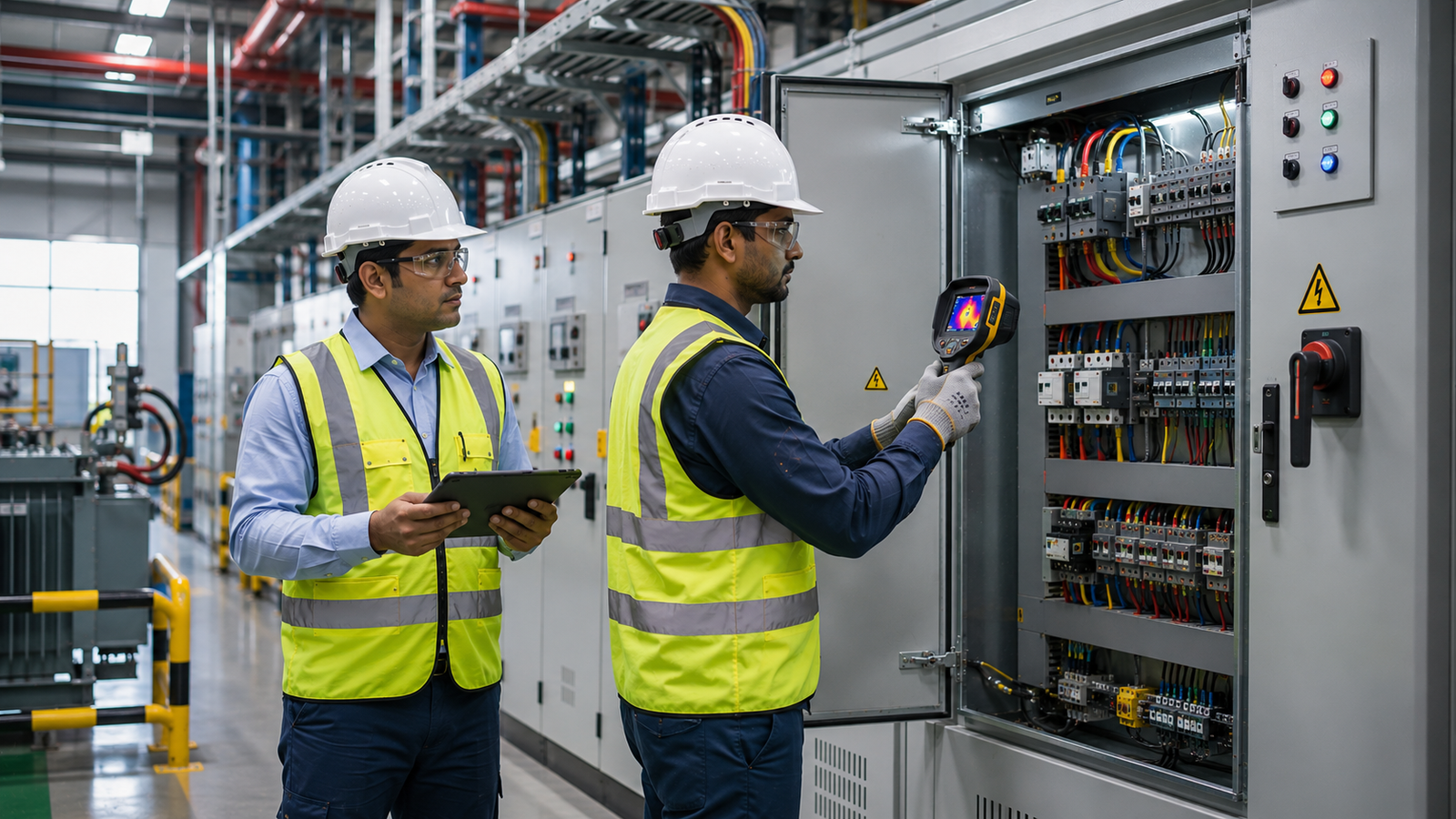
โšก Electrical Safety Audit

Identify Electrical Risks. Prevent Failures. Protect People & Property.

An Electrical Safety Audit is a systematic assessment of electrical installations, equipment, systems, work practices, and safety controls to identify potential hazards and opportunities for improvement.

Our audit helps organisations identify risks such as electrical shock, short circuits, overheating, overloading, poor earthing, damaged wiring, inadequate protection, unsafe electrical practices, and potential electrical fire hazards.

Through detailed inspection, document review, technical observations, and practical recommendations, the audit provides management with a clear understanding of the condition of electrical safety at the workplace and the actions required to strengthen it.


โšก What We Assess

๐Ÿ”Œ Electrical Installations

Assessment of electrical panels, distribution systems, wiring, connections, and associated installations.

๐Ÿ›ก๏ธ Protection Systems

Review of protective devices and arrangements intended to protect people, equipment, and electrical systems.

๐ŸŒ Earthing & Bonding

Assessment of earthing arrangements and bonding practices relevant to electrical safety.

๐Ÿ”ฅ Electrical Fire Risks

Identification of conditions that may contribute to overheating, short circuits, arcing, or electrical fires.

๐Ÿ‘ท Safe Work Practices

Review of electrical work procedures, isolation practices, PPE, and employee awareness.

๐Ÿ“‹ Documentation & Compliance

Review of relevant inspection, testing, maintenance, and electrical safety records.


๐Ÿ” Key Audit Areas

The Electrical Safety Audit may cover:

  • โšก Electrical panels

  • ๐Ÿ”Œ Distribution boards

  • ๐Ÿงฐ Switchgear

  • ๐Ÿ”‹ Transformers

  • โš™๏ธ Motors

  • ๐Ÿญ Industrial machinery

  • ๐Ÿ”— Cable installations

  • ๐Ÿงต Wiring systems

  • ๐ŸŒ Earthing systems

  • ๐Ÿ”„ Bonding arrangements

  • ๐Ÿ›ก๏ธ Protective devices

  • โš™๏ธ Circuit breakers

  • ๐Ÿ”ฅ Electrical fire hazards

  • ๐Ÿ“ˆ Load conditions

  • ๐Ÿ”Œ Sockets and outlets

  • ๐Ÿ’ก Lighting systems

  • ๐Ÿงฏ Emergency power arrangements

  • ๐Ÿ”‹ UPS systems

  • โšก Generators

  • ๐Ÿ—๏ธ Temporary electrical installations

  • ๐Ÿ”ง Electrical maintenance practices

  • ๐Ÿชœ Electrical work at height

  • ๐Ÿงค Electrical PPE

  • ๐Ÿšง Electrical access controls

  • ๐Ÿท๏ธ Electrical identification and signage

  • ๐Ÿ“‹ Testing and inspection records


๐Ÿงฐ Electrical Panel Inspection

The Electrical Panel Is the Heart of the Distribution System

We may assess:

  • Panel condition

  • Accessibility

  • Identification and labelling

  • Circuit identification

  • Enclosure condition

  • Signs of overheating

  • Loose or damaged connections

  • Cable entry arrangements

  • Unused openings

  • Internal housekeeping

  • Protective devices

  • Warning signage

  • Access control

  • Clearance around panels

Keep Panels Identified, Accessible, Protected, and Maintained.


๐Ÿ”ฅ Electrical Fire Risk Assessment

Electrical faults can create significant fire risks.

The audit looks for potential indicators such as:

  • ๐Ÿ”ฅ Overheating

  • โšก Arcing

  • ๐Ÿ”Œ Overloaded circuits

  • ๐Ÿ”— Loose connections

  • ๐Ÿงต Damaged insulation

  • ๐Ÿ› ๏ธ Improper modifications

  • ๐Ÿ”‹ Overloaded power strips

  • ๐Ÿ“ฆ Combustible materials near electrical equipment

  • ๐Ÿ’ง Moisture exposure

  • ๐Ÿงฐ Poor maintenance

  • โš ๏ธ Incorrect protective devices

Find the Heat Before It Becomes a Fire.


๐ŸŒ Earthing & Bonding

A Reliable Earthing System Is a Critical Electrical Safety Control

The audit may review:

  • Earthing arrangements

  • Earth continuity

  • Equipment grounding

  • Bonding arrangements

  • Earth connections

  • Earthing conductors

  • Earthing identification

  • Test records

  • Accessibility of earthing points

  • Maintenance practices

Proper Earthing Helps Provide a Safer Path for Fault Currents and Supports Protective-Device Operation.

Testing should be carried out using appropriate instruments and by competent personnel in accordance with applicable requirements.


๐Ÿ›ก๏ธ Protective Devices

Protection Must Match the Electrical System

The audit may review the suitability and condition of applicable protective devices, such as:

  • Circuit breakers

  • Fuses

  • Residual-current protection

  • Overcurrent protection

  • Short-circuit protection

  • Earth-fault protection

  • Motor protection

  • Surge protection where applicable

The assessment considers whether protective arrangements are appropriately selected, maintained, identified, and tested.


๐Ÿ“ˆ Electrical Load & Overloading

Too Much Load Creates Too Much Heat

Potential warning signs include:

  • Frequent breaker tripping

  • Hot cables

  • Overloaded sockets

  • Multiple high-load devices on one circuit

  • Improvised electrical connections

  • Undersized conductors

  • Excessive extension-cord use

  • Unbalanced loads where relevant

Identify Overload Conditions Before They Become Equipment Failures or Fire Hazards.


๐Ÿ”— Cable & Wiring Inspection

We assess visible conditions such as:

  • Cable damage

  • Exposed conductors

  • Poor insulation

  • Improper joints

  • Unprotected cables

  • Poor cable routing

  • Mechanical damage

  • Unsupported cables

  • Improper termination

  • Temporary wiring

  • Unused cables

  • Cable identification

No Exposed Conductors. No Unsafe Joints. No Uncontrolled Temporary Wiring.


๐Ÿ”Œ Sockets, Plugs & Extension Cords

Small Connections Can Create Big Risks

The audit may identify:

  • Damaged plugs

  • Loose sockets

  • Overloaded outlets

  • Unapproved adapters

  • Poor-quality extension arrangements

  • Damaged extension cables

  • Multiple connections

  • Improper repairs

  • Cables across walkways

  • Unprotected connections

Use Electrical Accessories Suitable for the Application and Maintain Them Properly.


โš™๏ธ Motors & Machinery

Electrical safety around machinery may include review of:

  • Motor connections

  • Protective devices

  • Earthing

  • Cable condition

  • Emergency isolation

  • Control panels

  • Guards and enclosures

  • Maintenance practices

  • Visible signs of overheating

  • Unauthorised modifications

Safe Machinery Requires Both Mechanical and Electrical Controls.


โšก Electrical Isolation & LOTO

Isolate Before You Work

The audit may review the organisation’s approach to:

๐Ÿ›‘ STOP
Stop the equipment safely.

โ†“

๐Ÿ”Œ ISOLATE
Disconnect the energy source.

โ†“

๐Ÿ”’ LOCK
Apply appropriate lockout controls.

โ†“

๐Ÿท๏ธ TAG
Identify the isolation and responsible person.

โ†“

๐Ÿ” VERIFY
Confirm the equipment is in a safe energy state using an appropriate verification method.

โ†“

๐Ÿ› ๏ธ WORK
Carry out the task under the applicable safe-work procedure.

โ†“

๐Ÿ”„ RESTORE
Restore energy only after appropriate checks and authorisation.

Never Assume an Electrical Circuit Is Dead โ€” Verify.


๐Ÿงค Electrical PPE

Depending on the task and risk assessment, PPE may include:

  • ๐Ÿงค Electrical protective gloves

  • ๐Ÿฅฝ Eye protection

  • ๐Ÿ›ก๏ธ Face protection

  • ๐Ÿ‘ท Protective headgear

  • ๐Ÿ‘• Appropriate protective clothing

  • ๐Ÿ‘ข Safety footwear

  • ๐Ÿงฐ Insulated tools where required

  • โšก Arc-rated PPE where applicable

PPE Must Be Selected According to the Actual Electrical Hazard and Task.


โš ๏ธ Electrical Work Practices

The audit may assess whether electrical work is controlled through:

  • Competent and authorised personnel

  • Appropriate work procedures

  • Isolation and lockout

  • Permit systems where applicable

  • Electrical drawings

  • Risk assessments

  • Job Safety Analysis

  • Appropriate PPE

  • Suitable tools

  • Test equipment

  • Warning signs

  • Barricading

  • Emergency procedures

Only Competent, Authorised Personnel Should Perform Electrical Work Within Their Scope of Competence.


๐Ÿšง Electrical Room & Panel Safety

Keep Electrical Areas Controlled

We may inspect:

  • Restricted access

  • Housekeeping

  • Water ingress

  • Storage of materials

  • Clearance around equipment

  • Emergency access

  • Warning signage

  • Electrical hazard labels

  • Lighting

  • Ventilation where applicable

  • Fire protection arrangements

  • Panel accessibility

Electrical Rooms Are Work Areas โ€” Not Storage Areas.


๐Ÿ’ง Electrical Safety & Moisture

Water and electricity create a serious hazard.

The audit may identify:

  • Water leakage near electrical equipment

  • Wet electrical areas

  • Poor drainage

  • Unprotected outdoor equipment

  • Moisture entering panels

  • Damaged enclosures

  • Inadequate weather protection

Keep Electrical Equipment Dry and Protected From Environmental Conditions Appropriate to Its Installation.


โšก Generator & UPS Safety

Where applicable, the audit may review:

๐Ÿ”‹ UPS Systems

  • Electrical connections

  • Battery arrangements

  • Ventilation

  • Protection

  • Maintenance

  • Emergency isolation

โšก Generators

  • Electrical connections

  • Earthing

  • Changeover arrangements

  • Fuel-related fire risks

  • Ventilation

  • Access

  • Maintenance

  • Emergency controls

Backup Power Must Be Safe Power.


๐Ÿ—๏ธ Temporary Electrical Installations

Temporary electrical systems can introduce additional risks.

The audit may assess:

  • Temporary cables

  • Distribution arrangements

  • Protection devices

  • Earthing

  • Cable routing

  • Weather protection

  • Mechanical protection

  • Extension arrangements

  • Temporary panels

  • Inspection and maintenance

Temporary Does Not Mean Uncontrolled.


๐Ÿท๏ธ Electrical Identification & Signage

Effective identification helps people understand electrical hazards and equipment.

The audit may review:

  • Panel labels

  • Circuit identification

  • Warning signs

  • High-voltage warnings where applicable

  • Emergency isolation identification

  • Equipment numbering

  • Electrical room signage

  • Restricted-access signage

If It Is Important to Safety, Make It Visible.


๐Ÿ“‹ Electrical Documentation Review

The audit may review relevant documents and records such as:

  • Electrical single-line diagrams

  • Electrical inspection reports

  • Testing records

  • Earthing test records

  • Equipment maintenance records

  • Protective-device testing

  • Generator / UPS records

  • Thermographic reports where applicable

  • Electrical work permits

  • LOTO procedures

  • Electrical risk assessments

  • Training records

  • Competency / authorisation records

  • Previous audit reports

  • Corrective-action records

Good Records Help Demonstrate Control, Maintenance, and Continuous Improvement.


๐Ÿ” Electrical Inspection Methodology

Inspect โ†’ Test Where Applicable โ†’ Identify โ†’ Evaluate โ†’ Recommend

01 โ€” DOCUMENT REVIEW
Review available electrical drawings, inspection records, maintenance information, and procedures.

โ†“

02 โ€” VISUAL INSPECTION
Inspect electrical installations and equipment for visible deficiencies.

โ†“

03 โ€” TECHNICAL ASSESSMENT
Where included within the audit scope, conduct appropriate measurements or testing using suitable instruments and competent personnel.

โ†“

04 โ€” HAZARD IDENTIFICATION
Identify electrical shock, fire, equipment, and operational risks.

โ†“

05 โ€” RISK EVALUATION
Prioritise findings according to their potential consequence and urgency.

โ†“

06 โ€” RECOMMENDATIONS
Provide practical corrective and preventive actions.

โ†“

07 โ€” REPORT
Document findings, evidence, and recommended improvements.

โ†“

08 โ€” FOLLOW-UP
Where included, review progress toward corrective-action closure.


๐Ÿ“Š Risk-Based Findings

Findings can be prioritised according to their significance, for example:

๐Ÿ”ด Critical / Immediate Attention

Conditions presenting a potentially serious and immediate electrical safety risk.

๐ŸŸ  High Priority

Significant electrical deficiencies requiring prompt corrective action.

๐ŸŸก Medium Priority

Conditions requiring planned corrective action.

๐ŸŸข Improvement Opportunity

Measures that can strengthen existing electrical safety controls.

Final classification should be based on the specific installation, applicable requirements, technical assessment, and professional judgement.


๐Ÿ“‘ Electrical Safety Audit Report

The final report can include:

Executive Summary

Overall electrical safety condition and major observations.

Scope & Methodology

Areas, systems, and activities assessed.

Detailed Findings

Specific observations with supporting details.

Risk Prioritisation

Identification of findings requiring urgent, high, medium, or planned attention.

Photographic Evidence

Relevant photographs supporting observations, where appropriate.

Technical Observations

Applicable technical deficiencies identified during the assessment.

Corrective Recommendations

Practical actions to address identified risks.

Action Plan

Recommended priorities and target actions where agreed.


๐Ÿญ Facilities We Can Assess

Electrical Safety Audits can be tailored for:

  • ๐Ÿญ Manufacturing plants

  • ๐Ÿข Corporate offices

  • ๐Ÿฌ Commercial buildings

  • ๐Ÿ“ฆ Warehouses

  • ๐Ÿšš Logistics facilities

  • ๐Ÿฅ Hospitals and healthcare facilities

  • ๐Ÿซ Educational institutions

  • ๐Ÿจ Hotels

  • ๐Ÿ—๏ธ Construction sites

  • ๐Ÿ›๏ธ Shopping centres

  • ๐Ÿข Industrial premises

  • ๐Ÿญ Processing facilities

  • ๐Ÿช Retail facilities

  • ๐Ÿ˜๏ธ Residential / housing facilities

  • ๐Ÿข Data and technical facilities


๐ŸŽฏ Key Outcomes

An Electrical Safety Audit helps organisations:

  • Identify electrical hazards before incidents occur.

  • Identify potential electrical fire risks.

  • Improve electrical installation safety.

  • Identify unsafe wiring and connection practices.

  • Review earthing and bonding arrangements.

  • Identify potential overloading conditions.

  • Improve electrical panel safety.

  • Strengthen electrical isolation practices.

  • Improve maintenance planning.

  • Review electrical documentation.

  • Prioritise corrective actions.

  • Strengthen employee electrical-safety awareness.

  • Support applicable legal and technical requirements.

  • Improve reliability and operational safety.

  • Build a stronger electrical safety culture.


๐Ÿ† Why Conduct an Electrical Safety Audit?

๐Ÿ” Identify Hidden Risks

Find electrical conditions that may not be visible during routine operations.

โšก Prevent Electrical Incidents

Address potential shock, short-circuit, overheating, and fire hazards.

๐Ÿ›ก๏ธ Strengthen Controls

Improve protection, isolation, maintenance, and safe-work practices.

๐Ÿ“Š Prioritise Actions

Understand which deficiencies require immediate attention.

๐Ÿ”ฅ Reduce Fire Risk

Identify electrical conditions that could contribute to fire.

๐Ÿ“‹ Improve Compliance

Identify areas where electrical safety arrangements may require improvement against applicable requirements.

๐Ÿญ Improve Reliability

Well-maintained electrical systems can support safer and more reliable operations.


โญ From Inspection to Prevention

An Electrical Safety Audit is more than checking equipment.

It provides a structured opportunity to understand:

What electrical hazards exist?
โ†“
How effective are our current controls?
โ†“
Which risks require immediate action?
โ†“
What improvements are required?
โ†“
How can we prevent recurrence?

Find the Fault Before It Finds You.


โšก Electrical Safety Audit

Inspect. Identify. Correct. Protect.

Professional assessment of electrical installations, protection systems, earthing, wiring, panels, equipment, electrical work practices, fire risks, and safety documentation.

NISE Training & Safety Consultant

ISO 4500, ISO 14001 and ISO 9001

NISE is organization with long tradition of research in Skill development Applying various Skills to the major challengers in market. We deliver innovative / Quality skills to our customer to sustain in the challenging environment.

GET IN TOUCH

Stay Inspired.

We're Here To Make Your Website.

Design tips, trends, and ideas โ€” in your inbox.

Join
who get exclusive design insights in their inbox.

30,000+

Thank You!

You just subscribed our newsletter.