Advanced Diploma in Environmental Engineering – 1 Year
Protect the Environment. Manage Resources. Build a Sustainable Future.
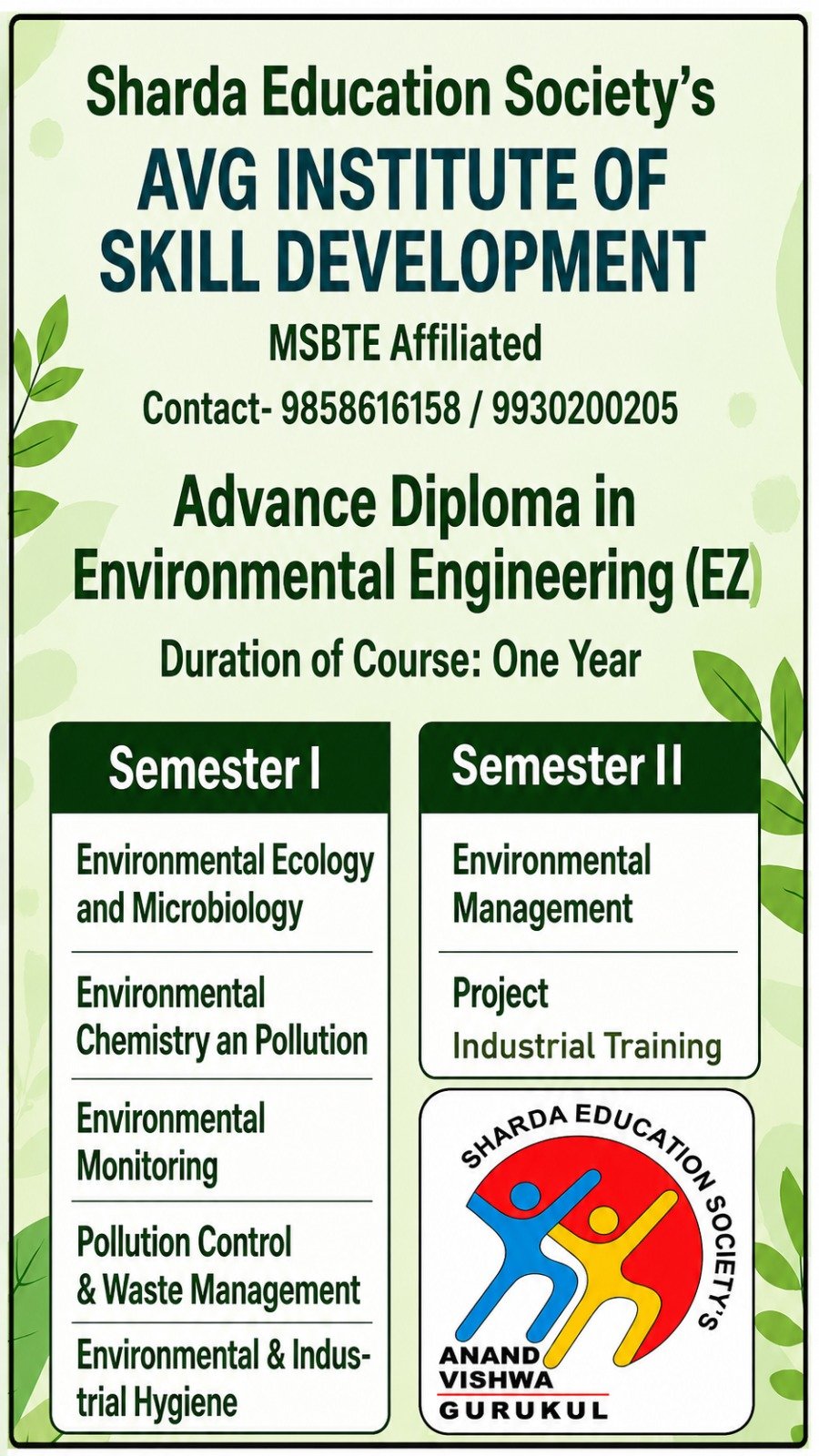
The Advanced Diploma in Environmental Engineering is a one-year professional program designed to develop advanced knowledge and practical skills in environmental protection, pollution control, waste management, water and wastewater treatment, environmental monitoring, and sustainable resource management.
The program covers environmental engineering principles, air pollution, water quality, wastewater treatment, solid and hazardous waste management, environmental impact assessment, environmental monitoring, industrial pollution control, and sustainable environmental practices.
01. What You’ll Learn
01. Environmental Engineering Fundamentals
Principles of environmental engineering
Environmental systems and processes
Environmental pollution and its impacts
Natural resource management
Sustainable environmental practices
02. Water & Wastewater Management
Water quality and pollution
Water treatment principles
Wastewater treatment processes
Effluent management
Water conservation and reuse
03. Air Pollution Control
Sources of air pollution
Air pollutants and their effects
Air quality monitoring
Industrial emission control
Air pollution prevention measures
04. Solid & Hazardous Waste Management
Solid waste classification
Waste collection and segregation
Treatment and disposal methods
Hazardous waste management
Waste minimisation and recycling
05. Environmental Monitoring & Assessment
Environmental sampling techniques
Air, water, and soil monitoring
Environmental data collection
Environmental impact assessment
Environmental performance evaluation
06. Sustainable & Environmental Management
Sustainable development principles
Resource conservation
Environmental management systems
Pollution prevention strategies
Environmental compliance and reporting
02. Key Environmental Engineering Areas
01. Environmental engineering fundamentals
02. Environmental pollution and control
03. Water quality and water treatment
04. Wastewater treatment and management
05. Air pollution and emission control
06. Solid waste management
07. Hazardous waste management
08. Waste minimisation and recycling
09. Soil and groundwater protection
10. Environmental monitoring
11. Environmental impact assessment
12. Industrial pollution control
13. Environmental management systems
14. Sustainable resource management
15. Environmental compliance and reporting
16. Environmental emergency preparedness
03. Practical Environmental Engineering Training
Learn to Monitor. Control Pollution. Manage Resources.
01. Environmental Site Inspection
Learn how to identify potential sources of environmental pollution, unsafe waste practices, and areas requiring environmental improvement.
02. Water Quality Monitoring
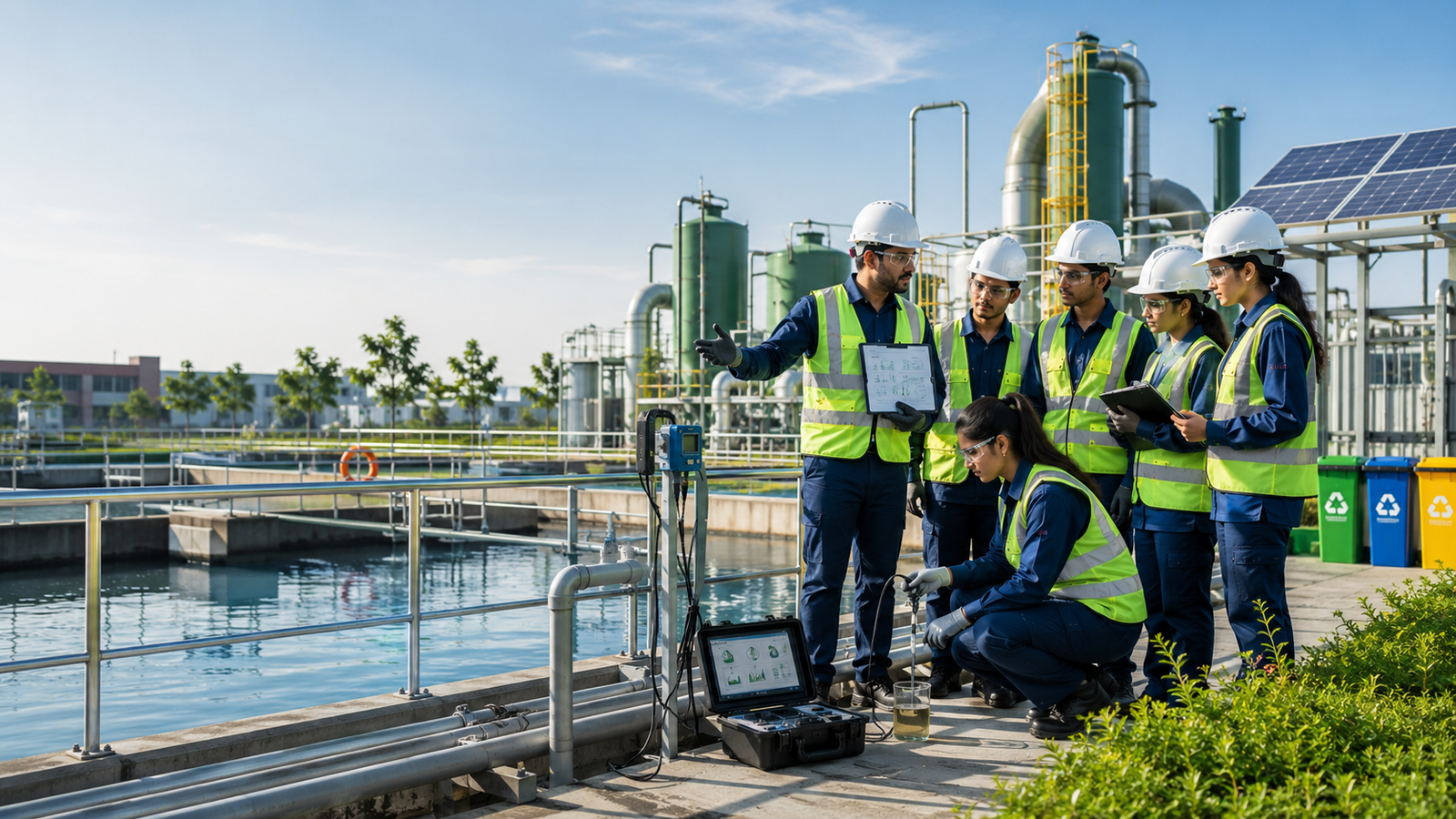
Understand basic methods of water sampling, water quality assessment, and identification of common water pollution indicators.
03. Waste Management Practices
Learn practical approaches to waste segregation, collection, storage, recycling, treatment, and responsible disposal.
04. Air Pollution Monitoring
Develop awareness of air pollutants, emission sources, monitoring methods, and basic pollution-control practices.
05. Environmental Assessment
Understand how environmental conditions are assessed through observations, sampling, monitoring, data collection, and reporting.
06. Pollution Control Measures
Learn how engineering and management controls can be applied to reduce pollution, conserve resources, and improve environmental performance.
04. Major Environmental Hazards
01. Water Pollution
Identify pollution sources such as untreated wastewater, industrial effluents, chemical discharges, and improper waste disposal that can affect water resources.
02. Air Pollution
Understand risks associated with industrial emissions, dust, fumes, gases, particulate matter, and other pollutants affecting air quality.
03. Hazardous Waste
Recognise hazards associated with the generation, handling, storage, transportation, treatment, and disposal of hazardous waste.
04. Soil & Land Contamination
Understand how chemicals, industrial waste, spills, and improper disposal practices can contaminate soil and land resources.
05. Industrial Pollution
Identify environmental risks associated with manufacturing processes, production activities, chemical use, emissions, wastewater, and waste generation.
06. Improper Waste Management
Recognise environmental and health risks associated with poor segregation, open dumping, uncontrolled disposal, improper storage, and inadequate waste treatment.
05. Learning Outcomes
After completing the course, participants will be able to:
01. Understand advanced principles of environmental engineering and pollution control.
02. Identify major sources of environmental pollution and associated impacts.
03. Understand basic principles of water and wastewater treatment.
04. Recognise air pollution sources and appropriate pollution-control measures.
05. Apply basic principles of solid and hazardous waste management.
06. Understand environmental sampling, monitoring, and data collection practices.
07. Identify environmental risks associated with industrial activities.
08. Understand the basic principles of environmental impact assessment.
09. Support environmental management, pollution prevention, and resource conservation activities.
06. Who Can Attend?
01. Environmental Engineering Students
02. Environmental Professionals
03. Environmental Officers
04. Safety Officers
05. Industrial Safety Professionals
06. Environmental Consultants
07. Waste Management Personnel
08. Water & Wastewater Treatment Personnel
09. Facility Managers
10. Industrial Personnel
11. Sustainability Professionals
12. Professionals Seeking a Career in Environmental Management
07. Training Approach
Understand → Monitor → Assess → Control → Manage → Improve
The training combines classroom-based learning with practical demonstrations, environmental inspections, sampling exercises, pollution-control activities, waste-management case studies, monitoring exercises, and workplace-based environmental assessments.
08. Environmental Management Cycle
A Systematic Approach to Environmental Protection
01. Identify
Identify environmental aspects, pollution sources, resource consumption, and potential environmental hazards.
↓
02. Monitor
Collect relevant environmental information through observations, sampling, measurements, and monitoring activities.
↓
03. Assess
Evaluate environmental impacts, risks, performance, and areas requiring corrective action.
↓
04. Control
Apply suitable engineering, operational, and management controls to reduce pollution and environmental risks.
↓
05. Manage
Implement environmental procedures, waste-management practices, resource conservation measures, and monitoring programs.
↓
06. Improve
Review environmental performance and identify opportunities for pollution prevention and continuous improvement.
↓
07. Sustain
Promote responsible resource use, environmental protection, compliance, and long-term sustainable practices.
09. Key Benefits
01. For Students
Develops advanced knowledge of environmental engineering, pollution control, waste management, environmental monitoring, and sustainability.
02. For Environmental Professionals
Strengthens practical understanding of environmental assessment, pollution prevention, monitoring, waste management, and environmental performance.
03. For Organisations
Supports improved environmental practices, resource efficiency, pollution prevention, waste reduction, and environmental risk management.
04. For Industrial Teams
Improves awareness of environmental responsibilities, waste handling, pollution-control measures, resource conservation, and sustainable workplace practices.
10. Why Environmental Engineering Matters
Industrial development, urbanisation, and increasing resource consumption can create significant environmental challenges involving air, water, soil, waste, energy, and natural resources.
Effective environmental management requires a systematic approach to monitoring, assessment, pollution prevention, waste management, resource conservation, compliance, and continuous improvement.
The Advanced Diploma in Environmental Engineering provides learners with the knowledge and practical awareness required to identify environmental risks, support pollution-control programs, manage waste responsibly, conserve resources, and contribute to sustainable development.
Protect the Environment. Manage Resources. Create a Sustainable Future.
Advanced Diploma in Environmental Engineering
Pollution Control. Resource Management. Environmental Protection. Sustainability.