
Advanced Diploma in Fire Safety Engineering (FS) – 1 Year
Prevent Fire. Strengthen Safety. Protect Lives.
The Advanced Diploma in Fire Safety Engineering is a one-year professional program designed to develop advanced knowledge and practical skills in fire prevention, fire protection, life safety, emergency preparedness, and fire risk management.
The program covers fire science, fire safety systems, fire risk assessment, building and industrial fire safety, emergency planning, fire protection equipment, inspection procedures, incident response, and disaster management.
01. What You’ll Learn
01. Advanced Fire Science & Fire Behaviour
- Principles of combustion and fire chemistry
- Fire development and behaviour
- Heat transfer and fire spread
- Smoke movement and fire dynamics
- Classification of fires and hazards
02. Fire Risk Assessment & Prevention
- Identification of fire hazards
- Fire risk assessment principles
- Risk reduction and control measures
- Fire prevention strategies
- Fire safety management practices
03. Fire Protection Systems
- Fire detection and alarm systems
- Automatic sprinkler systems
- Hydrant and hose reel systems
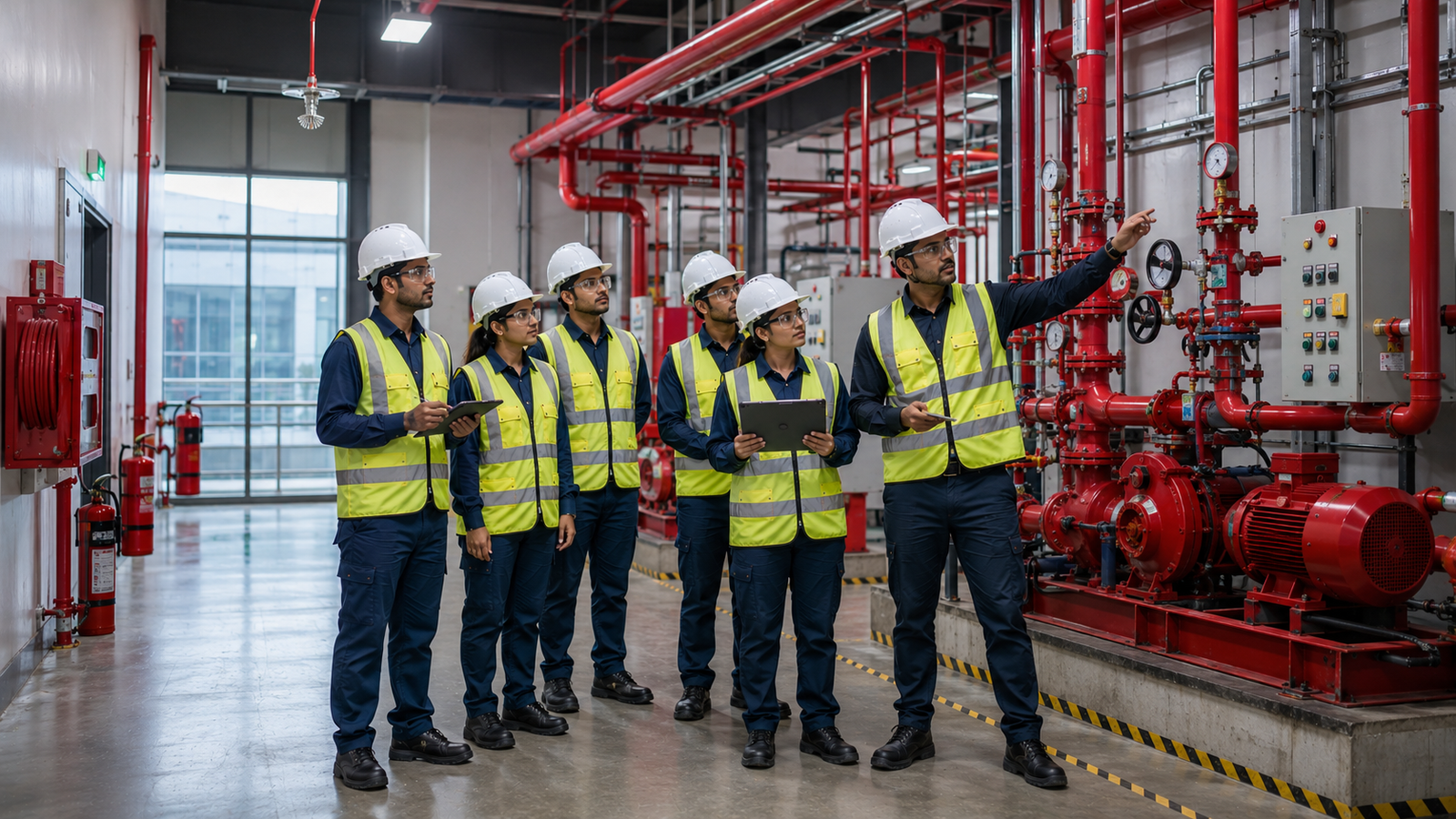
- Fire pumps and water supply
- Special fire suppression systems
04. Building & Life Safety
- Means of escape and evacuation
- Emergency exits and access routes
- Fire compartmentation
- Emergency lighting and signage
- Building fire safety requirements
05. Industrial Fire Safety
- Industrial fire hazards
- Flammable liquids and gases
- Chemical and process safety
- Storage and warehouse fire risks
- Industrial emergency response
06. Emergency & Disaster Management
- Emergency response planning
- Incident command principles
- Fire emergency procedures
- Disaster preparedness and response
- Post-incident evaluation and reporting
02. Key Fire Safety Engineering Areas
01. Advanced fire science and fire behaviour
02. Fire hazard identification
03. Fire risk assessment and management
04. Fire prevention and control
05. Fire detection and alarm systems
06. Automatic sprinkler systems
07. Hydrant and hose reel systems
08. Fire pumps and water supply systems
09. Building fire and life safety
10. Fire evacuation and emergency planning
11. Industrial fire safety
12. Flammable materials and process hazards
13. Fire protection equipment
14. Emergency response and incident management
15. Disaster management and preparedness
16. Fire safety inspection and reporting
03. Practical Fire Safety Training
Learn to Assess Risks. Prevent Fires. Protect People.
01. Fire Risk Assessment
Learn to identify fire hazards, evaluate risks, and recommend appropriate prevention and control measures.
02. Fire Extinguisher Operations
Understand the selection, inspection, handling, and practical use of different types of portable fire extinguishers.
03. Hydrant & Fire-Fighting Systems
Gain practical awareness of hydrants, hose reels, fire hoses, nozzles, fire pumps, and water supply arrangements.
04. Fire Alarm & Detection Systems
Understand the basic principles, components, operation, inspection, and maintenance awareness of fire detection and alarm systems.
05. Emergency Evacuation
Learn how to plan and manage safe evacuation, emergency routes, assembly areas, and occupant movement during fire emergencies.
06. Fire Safety Inspection
Develop practical skills for inspecting buildings, workplaces, equipment, escape routes, and fire protection arrangements.
04. Major Fire & Life Safety Hazards
01. Fire & Explosion Hazards
Understand risks associated with ignition sources, combustible materials, flammable substances, and conditions that may lead to fire or explosion.
02. Electrical Fire Hazards
Identify overloaded circuits, damaged wiring, faulty equipment, improper connections, and other electrical conditions that may contribute to fire.
03. Flammable Liquids & Gases
Recognise the hazards associated with storage, handling, transportation, leakage, ignition, and uncontrolled release of flammable substances.
04. Building Fire Hazards
Identify blocked exits, inadequate fire separation, poor access, insufficient fire protection, and unsafe building conditions.
05. Industrial & Process Hazards
Understand fire risks associated with manufacturing processes, machinery, chemicals, pressure systems, production areas, and storage facilities.
06. Evacuation & Life Safety Hazards
Recognise inadequate escape routes, poor emergency signage, overcrowding, disabled access issues, and weaknesses in emergency evacuation arrangements.
05. Learning Outcomes
After completing the course, participants will be able to:
01. Understand advanced principles of fire science and fire behaviour.
02. Identify and evaluate common fire hazards in buildings and workplaces.
03. Conduct basic fire risk assessments and recommend suitable control measures.
04. Understand the design principles and operation of major fire protection systems.
05. Recognise fire and life safety requirements for buildings and industrial facilities.
06. Develop awareness of emergency evacuation and fire response procedures.
07. Inspect basic fire safety equipment, systems, and emergency arrangements.
08. Understand industrial fire hazards and emergency management principles.
09. Apply fire prevention and risk-reduction practices in workplace environments.
06. Who Can Attend?
01. Fire Safety Students
02. Fire Service Personnel
03. Fire Safety Officers
04. Safety Officers
05. Safety Engineers
06. Industrial Safety Professionals
07. Facility Managers
08. Emergency Response Personnel
09. Fire Protection Personnel
10. Safety Supervisors
11. Maintenance Personnel
12. Professionals Seeking Advanced Fire Safety Knowledge
07. Training Approach
Assess → Prevent → Protect → Prepare → Respond → Improve
The training combines advanced classroom concepts with practical demonstrations, fire safety inspections, equipment familiarisation, risk assessment exercises, emergency scenarios, evacuation planning, and workplace-based case studies.
08. Fire Safety Management Cycle
A Systematic Approach to Fire Risk Management
01. Identify
Identify fire hazards, ignition sources, combustible materials, and unsafe conditions.
↓
02. Assess
Evaluate fire risks and determine the potential impact on people, property, and operations.
↓
03. Prevent
Apply appropriate prevention measures to reduce the likelihood of fire.
↓
04. Protect
Implement suitable detection, alarm, suppression, containment, and life-safety measures.
↓
05. Prepare
Develop emergency plans, evacuation procedures, training programs, and response arrangements.
↓
06. Respond
Take appropriate action during fire and emergency situations to protect people and property.
↓
07. Improve
Review inspections, incidents, drills, and observations to continuously improve fire safety.
09. Key Benefits
01. For Students
Builds advanced knowledge of fire safety engineering, fire prevention, fire protection systems, risk assessment, and emergency management.
02. For Safety Professionals
Strengthens the ability to identify fire hazards, assess risks, inspect safety systems, and support effective fire safety management.
03. For Organisations
Supports improved fire prevention, emergency preparedness, life-safety arrangements, and workplace risk management.
04. For Facility & Industrial Teams
Improves awareness of building fire safety, industrial hazards, fire protection systems, evacuation procedures, and emergency response.
10. Why Advanced Fire Safety Engineering Matters
Fire safety is a continuous process that requires effective risk assessment, prevention, protection, preparedness, response, and improvement.
Modern buildings, industries, and workplaces can contain complex fire hazards and protection systems. Properly trained fire safety professionals play an important role in identifying risks, maintaining safety systems, preparing emergency plans, and protecting people and property.
The Advanced Diploma in Fire Safety Engineering provides learners with the knowledge and practical awareness required to contribute effectively to fire prevention, life safety, emergency preparedness, and fire risk management.
Assess Risks. Prevent Fires. Protect Lives.
Advanced Diploma in Fire Safety Engineering
Fire Risk Management. Fire Protection. Life Safety. Emergency Preparedness.