
Crane Safety
Safe Lifting Through Proper Planning, Inspection and Control
The Crane Safety Course provides essential knowledge for safe crane and lifting operations. Participants learn about crane hazards, lift planning, load handling, rigging, communication, exclusion zones, equipment inspection and emergency procedures.
1. What You’ll Learn
1.1 Crane Fundamentals
Types of cranes and basic components
Crane operating principles
Roles and responsibilities of lifting personnel
1.2 Lifting Operations
Lift planning and preparation
Load assessment
Safe lifting procedures
Coordination of lifting activities
1.3 Load & Capacity
Load weight and centre of gravity
Crane capacity and operating limitations
Overloading risks
Load stability
1.4 Rigging & Lifting Accessories
Slings, shackles and hooks
Lifting accessories and attachments
Basic inspection requirements
Safe handling practices
1.5 Signalling & Communication
Designated signaler responsibilities
Standard signals
Radio communication
Stop signals and communication control
1.6 Exclusion Zones
Barricading and access control
Suspended-load hazards
Pedestrian and vehicle control
Safe clearance requirements
2. Key Training Areas
Crane types and components
Crane operating principles
Lift planning and preparation
Load weight and capacity
Centre of gravity
Slings, shackles and hooks
Lifting accessory inspection
Signalling and communication
Exclusion zones and barricading
Suspended-load hazards
Ground conditions and crane stability
Weather and environmental conditions
Overhead electrical hazards
Emergency procedures
Incident and near-miss reporting
3. Practical Crane Safety Training
Plan the Lift Before Moving the Load
3.1 Assess the Lift
Identify the load and lifting requirements
Check the lifting location and access
Consider ground and environmental conditions
Identify potential hazards
3.2 Inspect Equipment
Crane and lifting equipment
Hooks and safety latches
Slings and shackles
Safety devices and warning systems
3.3 Prepare the Area
Establish exclusion zones
Barricade hazardous areas
Control pedestrian and vehicle movement
Confirm suitable ground conditions
3.4 Connect the Load
Select suitable lifting accessories
Check load attachment
Consider balance and centre of gravity
Secure the load correctly
3.5 Communicate
Establish communication methods
Confirm signals before lifting
Coordinate the operator, signaler and rigging team
3.6 Execute the Lift
Follow the approved lifting procedure
Monitor the load and surrounding area
Stop the operation if unsafe conditions develop
3.7 Complete the Lift
Safely land and release the load
Secure lifting equipment
Conduct post-lift checks
Report relevant defects or observations
4. Load Safety
Know the Load Before You Lift
01. Load Weight
Confirm the load weight and suitability for the planned lift.
02. Centre of Gravity
Consider load balance and stability during lifting.
03. Crane Capacity
Check the crane’s rated capacity for the applicable configuration and operating conditions.
04. Lifting Accessories
Use suitable, inspected and properly rated accessories.
05. Suspended Loads
Keep personnel away fromareas exposed to dropped or swinging loads.
5. Crane & Equipment Inspection
Inspect Before Every Lift
Check for:
Damaged hooks or safety latches
Worn or damaged wire ropes
Damaged slings
Deformed shackles
Defective lifting accessories
Unsuitable attachments
Mechanical or hydraulic problems
Defective warning or safety systems
Poor ground or setup conditions
Signs of overloading or misuse
If Equipment Is Unsafe — Stop, Isolate and Report.
6. Signalling & Communication
One Lift. One Plan. One Clear Signal.
01. Designated Signaler
Use an appropriately designated person to control lifting signals.
02. Clear Signals
Use agreed and understood communication methods.
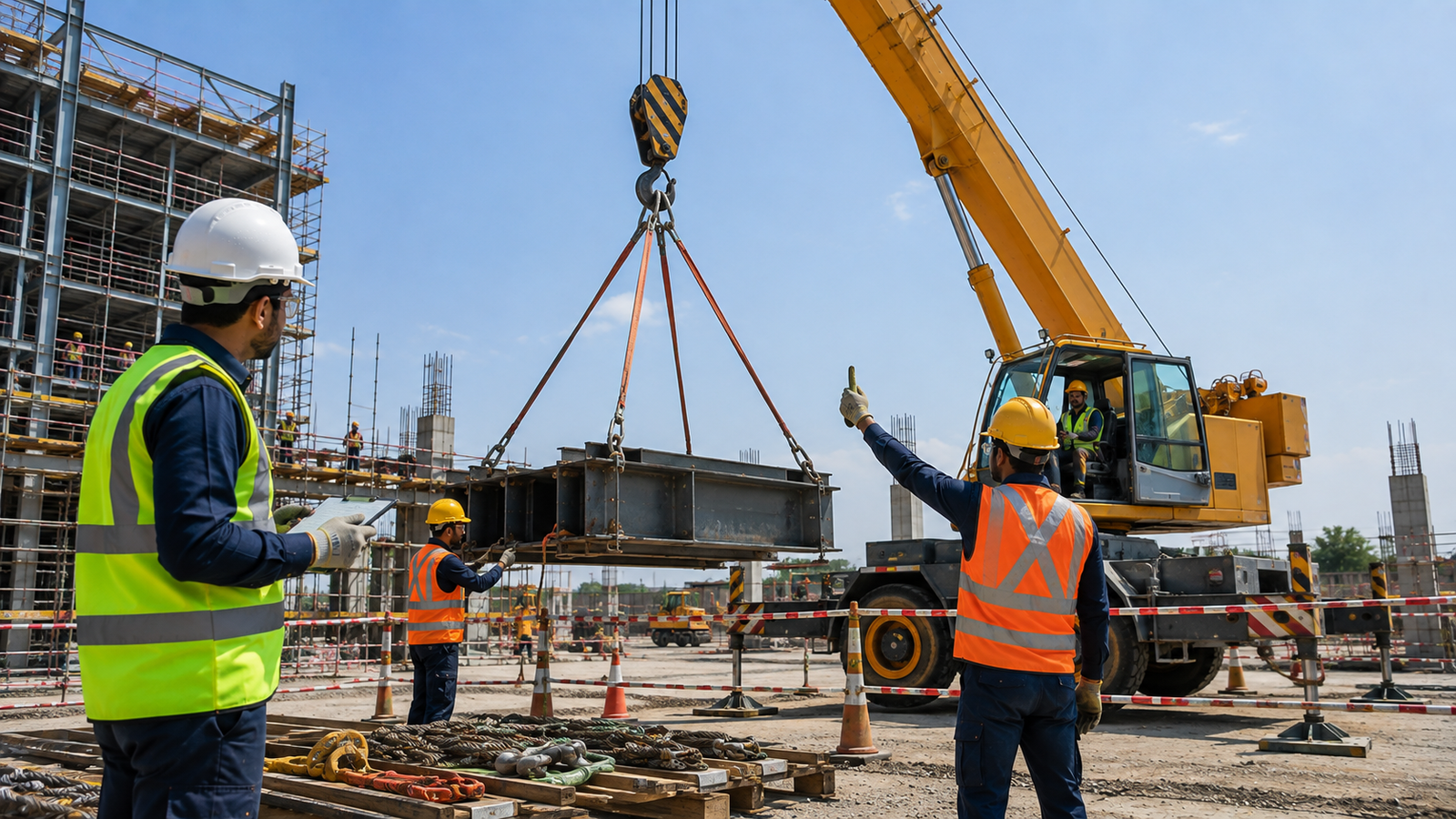
03. Line of Sight
Maintain suitable visibility between the operator and signaler where required.
04. Radio Communication
Use clear and effective radio communication where applicable.
05. Stop Signal
Ensure the appropriate stop instruction is understood and acted upon immediately.
7. Lifting Exclusion Zones
Keep People Away From Suspended Loads
Participants learn to:
Establish suitable lifting zones
Barricade hazardous areas
Control unauthorised access
Keep personnel away from suspended loads
Maintain safe equipment clearances
Control pedestrian and vehicle movement
Monitor changing site conditions
8. Emergency Response
Respond Quickly and Follow Site Procedures
8.1 Load Instability
Stop the operation and follow the established emergency procedure.
8.2 Rigging Failure
Maintain the exclusion zone and initiate the appropriate response.
8.3 Electrical Contact
Follow site emergency procedures and maintain safe distances.
8.4 Severe Weather
Suspend lifting activities when environmental conditions become unsafe.
8.5 Equipment Failure
Stop work, secure the area and report the equipment condition.
9. Learning Outcomes
After completing the course, participants will be able to:
Understand basic crane and lifting principles.
Identify common crane-related hazards.
Understand basic lift planning requirements.
Recognise load weight and capacity considerations.
Identify common lifting accessories.
Understand basic equipment inspection requirements.
Recognise suspended-load hazards.
Understand safe signalling and communication practices.
Support effective exclusion-zone control.
Recognise electrical, weather and ground-related hazards.
Follow established emergency procedures.
Report unsafe conditions, defects, incidents and near misses.
Contribute to safer lifting operations.
10. Who Should Attend?
Suitable for:
Crane Operators
Riggers
Signalers / Banksmen
Lifting Supervisors
Safety Officers
Site Supervisors
Construction Workers
Engineers
Maintenance Personnel
Contractors
Project Managers
Lifting Team Members
Safety Trainees
11. Training Approach
Understand → Plan → Inspect → Communicate → Lift → Evaluate
The programme combines:
01. Classroom Learning
Basic crane safety principles and lifting requirements.
02. Practical Demonstrations
Equipment, rigging and safe lifting practices.
03. Hazard Identification
Recognition of common lifting hazards and unsafe conditions.
04. Lifting Scenarios
Practical situations for developing safe decision-making.
05. Interactive Discussions
Review of incidents, controls and safe work practices.
Practical crane operations should only be performed by appropriately trained and authorised personnel using suitable equipment and under competent supervision.
12. Safe Lifting Cycle
Every Safe Lift Starts Before the Crane Moves
01. PLAN
Understand the load, equipment, location and hazards.
02. INSPECT
Check the crane, lifting accessories and work area.
03. ASSESS
Consider weight, capacity, stability, ground and environmental conditions.
04. CONTROL
Establish exclusion zones and required safety controls.
05. COMMUNICATE
Confirm the lifting plan and agreed signals.
06. LIFT
Execute the lift according to the approved procedure.
07. MONITOR
Watch for changing conditions and stop when necessary.
08. COMPLETE
Safely land the load, secure equipment and report relevant issues.
13. Key Benefits
For Operators
Improve crane hazard awareness and safe operating practices.
For Riggers & Signalers
Strengthen load-handling, signalling and team coordination.
For Supervisors
Improve lift planning, monitoring and hazard control.
For Organisations
Support safer lifting operations and stronger workplace safety practices.
14. Why Crane Safety Matters
Crane operations involve heavy loads, moving equipment, suspended materials and changing site conditions. Poor planning or unsafe lifting practices can create serious risks.
Effective crane safety training helps teams:
Plan lifting activities
Identify hazards
Inspect equipment
Communicate clearly
Control access
Stop unsafe operations
Plan the Lift. Control the Risk. Lift Safely.
Crane Safety
Safe Lifting Through Proper Planning and Control
Develop the knowledge and practical awareness required to identify crane hazards, support safe lifting operations and protect personnel working around lifting equipment.