
Defensive Driving
Think Ahead. Stay Alert. Drive Defensively. Arrive Safely.
The Defensive Driving Course is designed to help drivers develop the awareness, judgement, anticipation, and decision-making skills needed to prevent road incidents before they happen.
Rather than focusing only on driving rules, the training teaches participants to identify hazards early, anticipate the actions of other road users, maintain safe following distances, manage speed, control distractions, and respond appropriately to changing road and weather conditions.
Through real-life driving scenarios, interactive discussions, demonstrations, and practical exercises, participants develop a proactive driving mindset that helps protect themselves, passengers, pedestrians, other road users, and company assets.
1. What You’ll Learn
1.1 Hazard Awareness
Learn to identify potential hazards before they become immediate threats.
1.2 Anticipatory Driving
Understand how to predict the possible actions of pedestrians, cyclists, motorcycles, and other vehicles.
1.3 Safe Speed Management
Learn how speed, road conditions, traffic, visibility, and vehicle condition influence stopping distance and control.
1.4 Safe Following Distance
Understand how to maintain adequate distance and allow sufficient reaction time.
1.5 Distraction Control
Recognise the dangers of mobile phones, fatigue, conversations, navigation systems, and other distractions.
1.6 Adverse Conditions
Learn how to adapt driving techniques to rain, poor visibility, slippery roads, traffic congestion, and other challenging conditions.
2. Key Training Areas
Participants are introduced to:
Defensive driving principles
Hazard perception
Situational awareness
Anticipatory driving
Emergency braking awareness
Safe following distance
Speed management
Safe lane discipline
Safe overtaking
Intersection safety
Motorcycle awareness
Pedestrian awareness
Heavy-vehicle awareness
Distracted driving prevention
Fatigue awareness
Adverse weather driving
Night driving awareness
Highway driving safety
Urban driving safety
Parking and reversing safety
Vehicle condition awareness
Seat-belt safety
Emergency response
Journey risk management
3. The Defensive Driving Mindset
See → Think → Anticipate → Decide → Act
Defensive driving is about staying one step ahead.
01 — SEE
Continuously scan the road, traffic, pedestrians, vehicles, signs, and surrounding environment.
02 — THINK
Identify what could potentially go wrong.
03 — ANTICIPATE
Predict what other road users might do.
04 — DECIDE
Choose the safest available response.
05 — ACT
Take timely and controlled action.
Don’t Just React to Hazards — Anticipate Them.
4. Hazard Perception
Spot the Risk Before It Becomes an Emergency
Drivers learn to look beyond the vehicle immediately in front of them and identify:
4.1 Pedestrians
People crossing roads, walking near traffic, or entering blind areas.
4.2 Two-Wheelers
Motorcycles and scooters moving through traffic or approaching from blind spots.
4.3 Other Vehicles
Sudden lane changes, unsafe overtaking, braking, turning, or merging.
4.4 Heavy Vehicles
Large blind spots, wide turns, long stopping distances, and limited manoeuvrability.
4.5 Intersections
Vehicles or pedestrians entering from different directions.
4.6 Road Conditions
Potholes, debris, uneven surfaces, construction zones, and road obstructions.
4.7 Weather
Rain, fog, glare, strong winds, and reduced visibility.
5. Safe Following Distance
Give Yourself Time to React
Participants understand why following too closely increases risk.
A safe following distance should consider:
Vehicle speed
Traffic conditions
Weather
Visibility
Road surface
Vehicle condition
Driver alertness
Vehicle type
Load carried
More Risk = More Space
Drivers should increase following distance whenever conditions reduce visibility, traction, or reaction time.
6. Speed Management
Speed Is Not Just a Number
A safe speed depends on more than the posted limit.
Drivers should consider:
6.1 Road
Surface, curves, intersections, construction, and traffic.
6.2 Weather
Rain, fog, wind, or poor visibility.
6.3 Traffic
Vehicle density and movement.
6.4 Visibility
Daylight, darkness, glare, and blind areas.
6.5 People
Pedestrians, cyclists, and other vulnerable road users.
6.6 Vehicle
Vehicle condition, load, braking capability, and handling characteristics.
Drive at a Speed That Allows You to Stop Safely Within the Available Visibility and Conditions.
7. Distracted Driving
Eyes on the Road. Mind on the Drive.
Common distractions include:
Mobile phone use
Texting
Calls
Adjusting navigation
Operating entertainment systems
Eating or drinking
Passenger interaction
Fatigue
Mental distraction
Handling objects while driving
A Few Seconds of Distraction Can Change the Entire Journey.
Participants learn strategies for controlling distractions and maintaining attention.
8. Fatigue & Drowsy Driving
If You Are Too Tired to Drive Safely, Don’t Drive.
Participants learn to recognise warning signs such as:
Frequent yawning
Heavy eyelids
Difficulty concentrating
Repeated lane drifting
Missing road signs
Slower reactions
Forgetting recent sections of the journey
Difficulty maintaining alertness
Fatigue Management Principles
8.1 Adequate Rest
Start journeys sufficiently rested.
8.2 Breaks
Take appropriate breaks during long journeys.
8.3 Journey Planning
Avoid unnecessary extended driving periods.
8.4 Driver Rotation
Where appropriate, use planned driver changes.
8.5 Stop When Unsafe
Do not continue driving when fatigue compromises safe control.
9. Driving in Adverse Weather
When Conditions Change — Your Driving Must Change
9.1 Rain
Reduce speed appropriately.
Increase following distance.
Avoid sudden braking or steering.
Be alert for reduced visibility and slippery surfaces.
9.2 Fog
Reduce speed.
Use appropriate vehicle lighting.
Increase following distance.
Avoid sudden manoeuvres.
9.3 Night Driving
Manage speed according to visibility.
Watch for pedestrians and unlit vehicles.
Avoid glare where possible.
Maintain appropriate following distance.
9.4 Strong Winds
Maintain firm control.
Be cautious around large vehicles.
Anticipate sudden changes in vehicle stability.
Poor Conditions Require Greater Attention — Not Greater Confidence.
10. Highway Safety
Stay Predictable. Stay Alert.
Participants learn awareness of:
Safe lane discipline
Appropriate following distance
Safe overtaking
Blind spots
Merging traffic
Exit and entry points
Heavy vehicles
Speed management
Fatigue
Sudden braking
Roadside hazards
Predictable Driving Helps Everyone on the Road Make Better Decisions.
11. Safe Overtaking
Overtake Only When It Is Safe and Necessary
Before overtaking, consider:
11.1 Visibility
Can you clearly see the road ahead?
11.2 Distance
Is there sufficient space?
11.3 Traffic
Could another vehicle enter your path?
11.4 Road
Is the road suitable for overtaking?
11.5 Speed
Can the manoeuvre be completed safely?
11.6 Clearance
Is there sufficient space from other road users?
If You Are Unsure — Don’t Overtake.
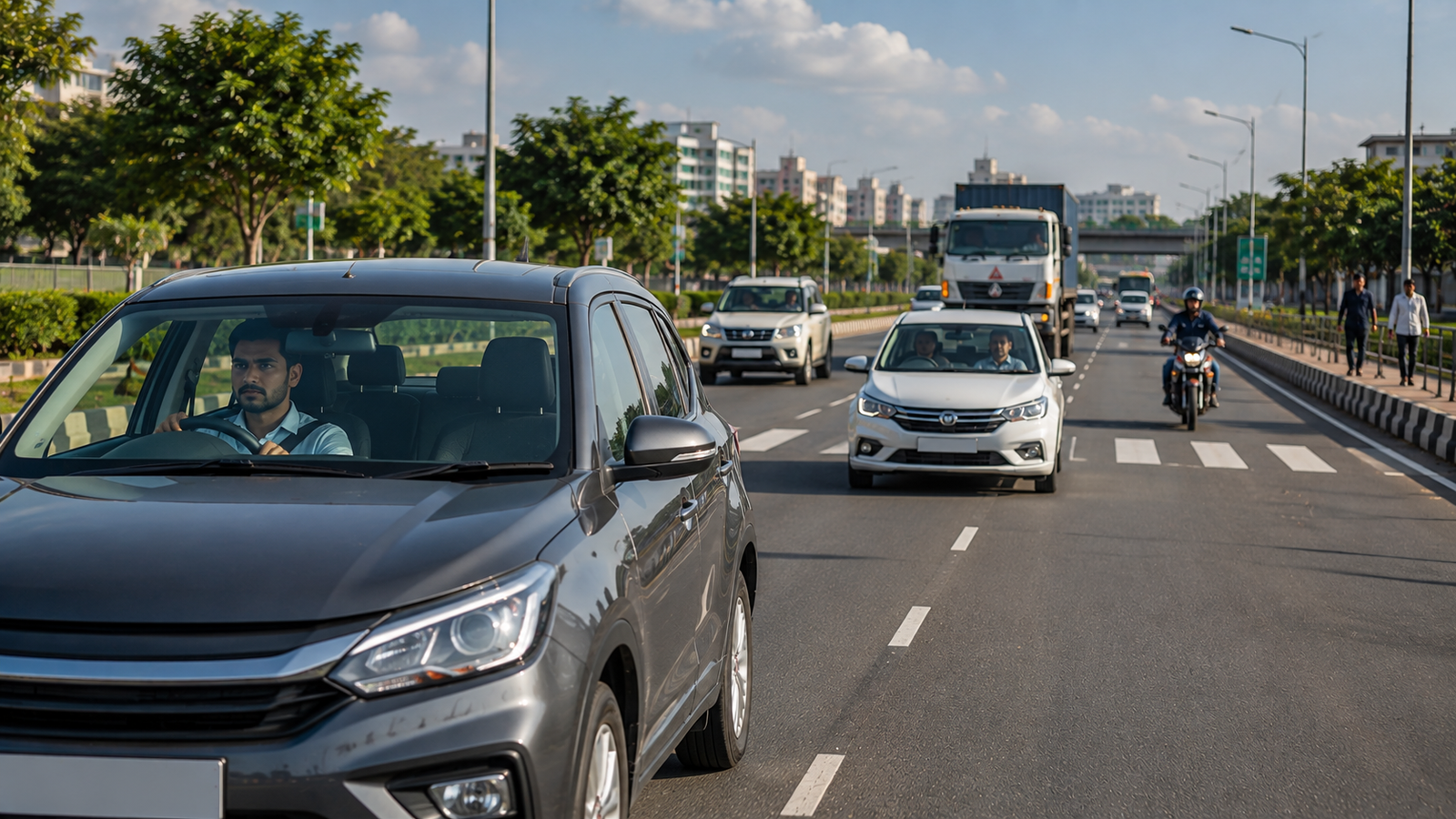
12. Lane Discipline & Blind Spots
Participants learn the importance of:
Checking mirrors regularly
Signalling intentions
Avoiding unnecessary lane changes
Maintaining appropriate lane position
Checking blind spots before manoeuvring
Maintaining adequate clearance
Being especially cautious around motorcycles and heavy vehicles
Signal → Mirror → Blind-Spot Check → Manoeuvre
13. Intersection Safety
Slow Down. Look. Anticipate.
Intersections can involve multiple conflicting movements.
Drivers learn to watch for:
Turning vehicles
Pedestrians
Motorcycles
Cyclists
Vehicles approaching from side roads
Vehicles running signals
Poor visibility
Uncontrolled intersections
Never Assume Another Road User Has Seen You.
14. Heavy Vehicle & Blind-Spot Awareness
Large vehicles may have significant blind areas.
Participants learn to:
Avoid remaining unnecessarily beside large vehicles.
Maintain safe clearance.
Exercise caution when approaching or overtaking.
Avoid sudden lane changes around heavy vehicles.
Understand wide turns.
Recognise limited visibility and stopping capability.
If You Cannot See the Driver, They May Not Be Able to See You.
15. Reversing & Parking Safety
Reversing Is a High-Risk Manoeuvre
Participants learn safe practices such as:
Check the area before reversing.
Use mirrors appropriately.
Check blind areas.
Move slowly.
Avoid unnecessary reversing.
Use a trained spotter where required and appropriate.
Watch for pedestrians.
Do not rely solely on cameras or sensors.
Stop If You Lose Sight of the Area You Need to Control.
16. Vehicle Safety Awareness
A Safe Driver Needs a Safe Vehicle
Drivers learn the importance of checking:
16.1 Tyres
Condition, pressure, and visible damage.
16.2 Brakes
Any warning signs or abnormal performance.
16.3 Lights
Headlights, brake lights, indicators, and other required lights.
16.4 Mirrors
Correct adjustment and visibility.
16.5 Seat Belts
Proper use and condition.
16.6 Warning Systems
Dashboard warnings and vehicle alerts.
16.7 Safety Equipment
Required emergency equipment based on the vehicle and journey.
Report Vehicle Defects — Don’t Ignore Them.
17. Seat-Belt Safety
Every Trip. Every Seat. Every Time.
Participants learn that seat belts:
Help keep occupants properly positioned.
Reduce the likelihood of serious injury during a crash.
Should be used correctly by all occupants.
Should be checked before starting the journey.
The Safest Journey Starts Before the Vehicle Moves.
18. Emergency Response
Know What to Do When Something Goes Wrong
In the event of a road incident, participants learn the importance of:
18.1 Stop Safely
Stop in a safe location where possible.
18.2 Secure the Area
Take reasonable steps to prevent additional danger.
18.3 Alert
Contact appropriate emergency services and responsible personnel.
18.4 Assist
Provide assistance within your training and capability.
18.5 Report
Follow the applicable company incident-reporting procedure.
18.6 Learn
Support investigation and corrective actions where required.
Protect Yourself First. Then Help Others Safely.
19. Journey Risk Management
Safe Driving Starts Before the Journey
Participants learn to consider:
19.1 Route
Know the planned route and potential hazards.
19.2 Weather
Check expected conditions where appropriate.
19.3 Vehicle
Ensure the vehicle is suitable and in safe operating condition.
19.4 Driver
Confirm the driver is fit, alert, licensed, and authorised as required.
19.5 Time
Allow sufficient time rather than creating pressure to drive faster.
19.6 Communication
Plan communication without creating driving distractions.
19.7 Fuel / Charging
Plan suitable refuelling or charging stops.
Plan the Journey — Don’t Let the Journey Plan You.
20. Learning Outcomes
After completing the course, participants will be able to:
Understand the principles of defensive driving.
Develop stronger hazard-perception skills.
Identify potential road hazards early.
Anticipate the actions of other road users.
Maintain appropriate following distances.
Apply safe speed-management principles.
Understand the dangers of distracted driving.
Recognise fatigue and drowsy-driving risks.
Adapt driving to weather and road conditions.
Improve lane discipline and blind-spot awareness.
Understand safer overtaking practices.
Improve intersection awareness.
Recognise heavy-vehicle blind spots.
Apply safer reversing and parking practices.
Understand basic vehicle safety checks.
Improve emergency-response awareness.
Support safer journey planning.
Develop a proactive and responsible driving mindset.
21. Who Can Attend?
This course is suitable for:
Professional Drivers
Fleet Drivers
Company Drivers
Transport Personnel
Delivery Drivers
Supervisors
Managers
Fleet Managers
Logistics Personnel
Contractors
Sales & Service Teams
Employees Who Drive for Work
22. Training Approach
See → Think → Anticipate → Decide → Act
The course combines:
22.1 Classroom Learning
Core defensive-driving concepts and road-safety principles.
22.2 Real-Life Scenarios
Analysis of common road hazards and driver decisions.
22.3 Hazard-Perception Exercises
Identifying risks before they become emergencies.
22.4 Driving Discussions
Exploring practical responses to challenging road situations.
22.5 Adverse-Condition Scenarios
Understanding appropriate responses to rain, poor visibility, traffic, and other conditions.
22.6 Decision-Making Exercises
Developing safer judgement and anticipation skills.
22.7 Journey-Risk Exercises
Learning how to plan safer work-related journeys.
23. Defensive Driving Safety Cycle
Awareness Creates Prevention
01 — SCAN
Continuously observe the road and surrounding environment.
↓
02 — IDENTIFY
Recognise potential hazards.
↓
03 — ANTICIPATE
Predict what could happen next.
↓
04 — CREATE SPACE
Maintain safe distance and escape options.
↓
05 — CONTROL
Manage speed and vehicle position.
↓
06 — RESPOND
Take timely and controlled action.
↓
07 — ADAPT
Adjust to changing road, traffic, weather, and visibility conditions.
↓
08 — ARRIVE SAFELY
Complete the journey without unnecessary risk.
24. Key Benefits
24.1 For Drivers
Improve hazard awareness, anticipation, judgement, and decision-making.
24.2 For Supervisors
Promote safer driving behaviour and improve driver awareness.
24.3 For Fleet Managers
Support safer fleet operations and responsible driving practices.
24.4 For Organisations
Reduce exposure to road-traffic risks, strengthen driver safety culture, protect employees and company assets, and support safer business travel.
25. Why Defensive Driving Matters
Road incidents can happen in seconds. A driver who constantly scans the environment, anticipates hazards, maintains space, controls speed, and avoids distractions has a better opportunity to prevent an incident.
Defensive driving is more than following traffic rules. It is a proactive mindset that encourages drivers to expect the unexpected and make safer decisions before a situation becomes critical.
Don’t Drive Just to Reach the Destination. Drive to Arrive Safely.
Defensive Driving
Stay Alert. Think Ahead. Control the Risk.
Build the awareness, anticipation, decision-making, and practical driving habits needed to manage everyday road hazards and create a stronger culture of safe driving.