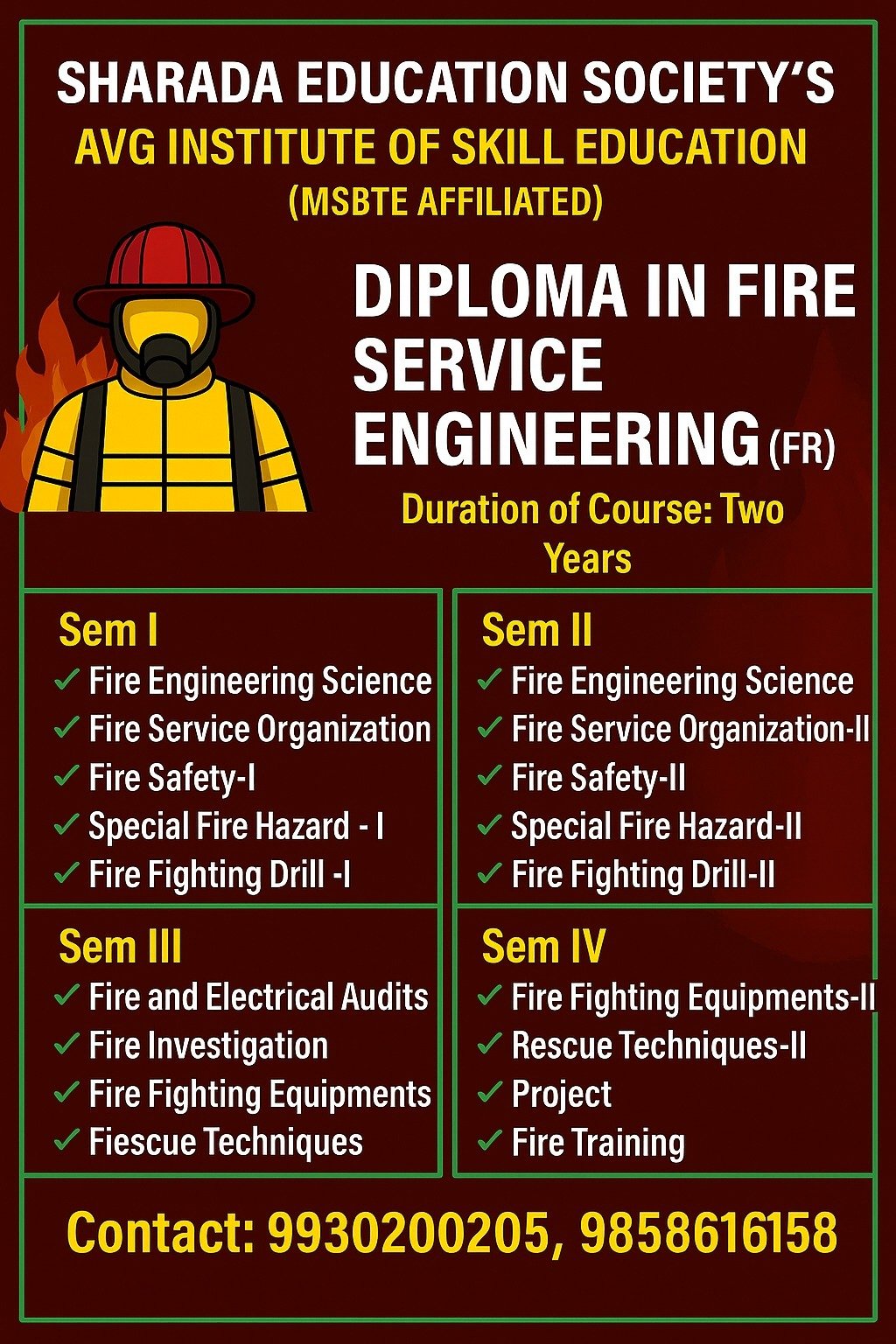
Diploma in Fire Service Engineering (FR) – 2 Years
Learn to Prevent Fires. Protect Lives. Respond with Confidence.
The Diploma in Fire Service Engineering is a comprehensive two-year program designed to develop knowledge and practical skills in fire prevention, fire protection, emergency response, rescue operations, and fire safety management.
The program covers fire science, fire-fighting systems, fire prevention, emergency procedures, rescue techniques, fire safety equipment, industrial fire safety, building fire protection, and disaster management.
01. What You’ll Learn
01. Fire Science & Fire Behaviour
- Fundamentals of fire and combustion
- Fire triangle and fire tetrahedron
- Types and classes of fire
- Fire development and behaviour
- Heat transfer and fire spread
02. Fire Prevention & Protection
- Principles of fire prevention
- Identification of fire hazards
- Fire risk assessment
- Fire prevention measures
- Fire protection systems
03. Fire-Fighting Techniques
- Basic fire-fighting principles
- Selection and use of extinguishing media
- Portable fire extinguishers
- Hose and hydrant operations
- Fire-fighting equipment and appliances
04. Rescue Operations
- Basic rescue principles
- Search and rescue procedures
- Rescue from buildings and confined areas
- Evacuation techniques
- Basic rope and rescue awareness
05. Fire Safety Systems
- Fire detection and alarm systems
- Sprinkler systems
- Hydrant and hose reel systems
- Fire pumps and water supplies
- Emergency lighting and fire safety equipment
06. Emergency & Disaster Management
- Emergency response procedures
- Incident command principles
- Evacuation and emergency planning
- Disaster preparedness
- Coordination during emergencies
02. Key Fire Service Engineering Areas
01. Fire science and combustion
02. Fire behaviour and fire development
03. Fire prevention and risk assessment
04. Fire protection systems
05. Fire detection and alarm systems
06. Fire extinguishers and extinguishing agents
07. Hydrant and hose reel systems
08. Fire pumps and water supply systems
09. Fire-fighting techniques
10. Rescue and evacuation operations
11. Building fire safety
12. Industrial fire safety
13. Emergency response planning
14. Disaster management
15. First-aid and emergency care awareness
16. Fire safety inspection and reporting
03. Practical Fire Service Training
Learn to Prevent, Control, Rescue and Respond
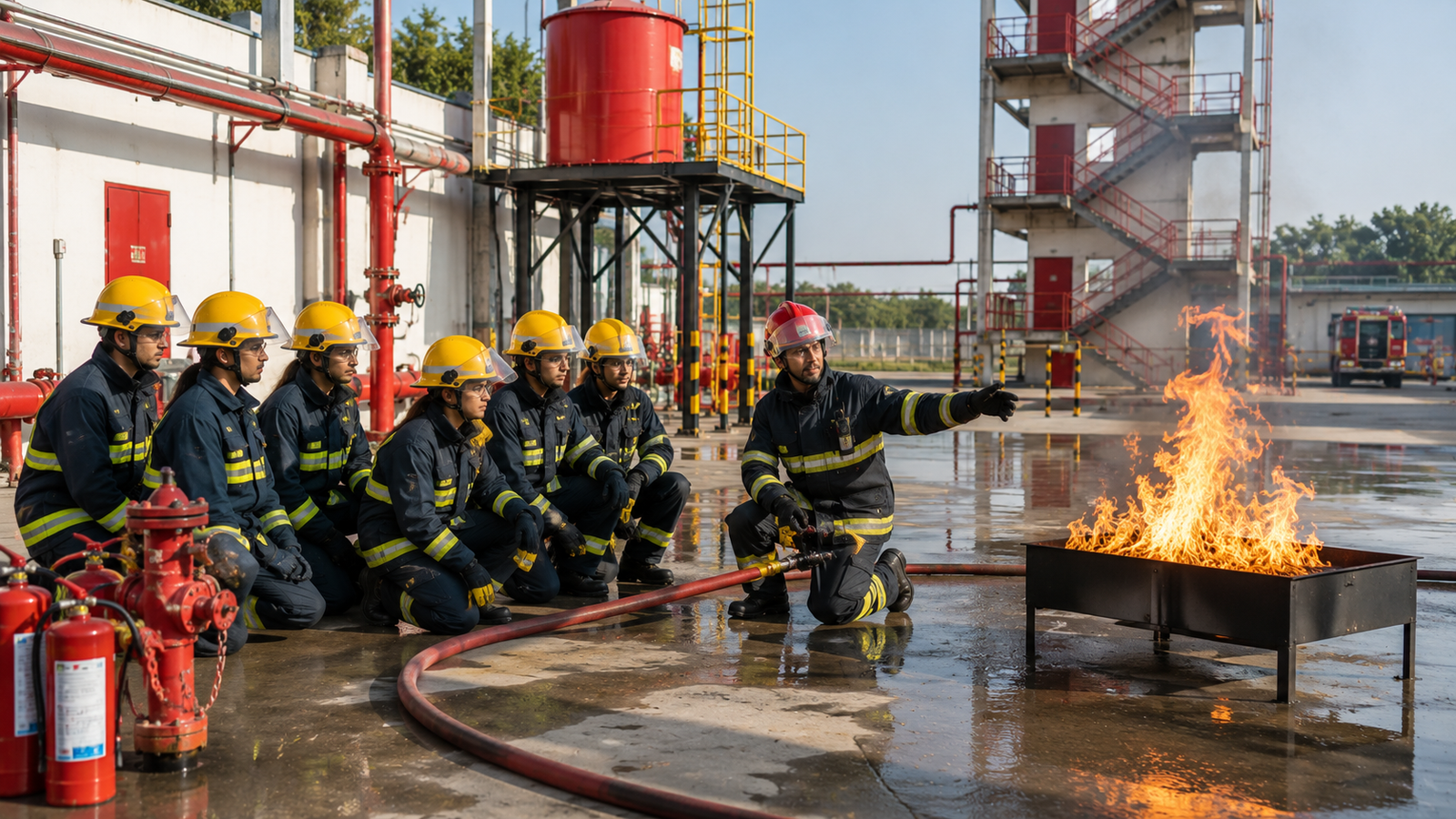
01. Fire Extinguisher Training
Learn the correct selection, handling, inspection, and basic operation of portable fire extinguishers.
02. Fire-Fighting Operations
Understand basic fire-fighting techniques, hose handling, water application, and safe approaches to fire incidents.
03. Hydrant & Hose Operations
Gain practical awareness of hydrant systems, hose reels, nozzles, hose handling, and water supply arrangements.
04. Fire Alarm & Detection Systems
Understand the basic operation and purpose of fire detection, alarm, and emergency notification systems.
05. Search & Rescue
Learn fundamental search, rescue, evacuation, and casualty-handling procedures during emergency situations.
06. Emergency Response
Develop awareness of incident response, communication, emergency procedures, and coordination during fire emergencies.
04. Major Fire & Life Safety Hazards
01. Fire & Combustion Hazards
Understand how fire starts, develops, spreads, and how different fuels behave during combustion.
02. Electrical Fire Hazards
Identify overloaded circuits, damaged cables, faulty equipment, unsafe connections, and other electrical fire risks.
03. Flammable Materials
Recognise hazards associated with flammable liquids, gases, combustible materials, and improper storage.
04. Building Fire Hazards
Understand risks related to blocked exits, inadequate fire protection, poor evacuation arrangements, and unsafe building conditions.
05. Industrial Fire Hazards
Identify common risks associated with industrial processes, machinery, chemicals, storage areas, and production environments.
06. Emergency Evacuation Hazards
Recognise blocked escape routes, inadequate emergency signage, overcrowding, poor emergency planning, and other evacuation risks.
05. Learning Outcomes
After completing the course, participants will be able to:
01. Understand the fundamental principles of fire science and fire behaviour.
02. Identify common fire hazards and apply basic fire-prevention principles.
03. Understand the operation and application of fire-fighting equipment.
04. Recognise the purpose and basic functioning of fire protection systems.
05. Apply basic fire-fighting and emergency response techniques.
06. Understand fundamental search, rescue, and evacuation procedures.
07. Assist with fire safety inspections and hazard identification.
08. Understand basic emergency planning and disaster management principles.
06. Who Can Attend?
01. Fire Service Trainees
02. Fire & Safety Students
03. Safety Officers
04. Fire Safety Officers
05. Safety Supervisors
06. Industrial Safety Personnel
07. Facility Managers
08. Security Personnel
09. Emergency Response Teams
10. Fire Protection Personnel
11. Safety Engineers
12. Personnel Seeking a Career in Fire Services
07. Training Approach
Understand → Prevent → Protect → Respond → Rescue → Recover
The training combines classroom-based knowledge with practical demonstrations, fire-fighting exercises, equipment familiarisation, emergency scenarios, hazard identification activities, and rescue-based learning.
08. Fire Safety & Emergency Response Cycle
A Safer Way to Prevent and Respond to Fire
01. Identify
Recognise fire hazards, unsafe conditions, and potential sources of ignition.
↓
02. Assess
Evaluate the level of fire risk and understand possible consequences.
↓
03. Prevent
Apply appropriate fire-prevention measures and safe working practices.
↓
04. Protect
Use suitable fire protection systems, equipment, and emergency arrangements.
↓
05. Respond
Take appropriate action when a fire or emergency occurs.
↓
06. Rescue
Support safe evacuation, search, rescue, and assistance to affected persons.
↓
07. Recover
Support post-incident activities, reporting, investigation, and safety improvement.
09. Key Benefits
01. For Students
Develops a strong foundation in fire science, fire prevention, fire-fighting, rescue operations, and emergency management.
02. For Fire Service Personnel
Strengthens practical awareness of fire-fighting equipment, emergency procedures, rescue techniques, and incident response.
03. For Safety Professionals
Improves understanding of fire hazards, fire protection systems, emergency planning, and workplace fire safety.
04. For Organisations
Supports stronger fire prevention practices, emergency preparedness, life-safety measures, and overall fire risk management.
10. Why Fire Service Engineering Matters
Fire emergencies can develop rapidly and may threaten lives, property, infrastructure, and business operations.
Effective fire safety requires more than fire-fighting alone. It involves prevention, detection, protection, preparedness, emergency response, rescue, and recovery.
Fire Service Engineering education helps develop the knowledge and practical awareness required to recognise fire risks, understand protection systems, respond to emergencies, and contribute to safer environments.
Prevent Fires. Protect Lives. Respond with Confidence.
Diploma in Fire Service Engineering
Fire Prevention. Fire Protection. Emergency Response. Life Safety.