
Electrical Safety Audit
Inspect. Identify. Correct. Protect.
An Electrical Safety Audit helps identify hazards in electrical installations, equipment, work practices, and safety controls. The audit focuses on practical improvements to reduce electrical shock, fire, equipment failure, and operational risks.
1. What We Assess
Electrical installations and distribution systems
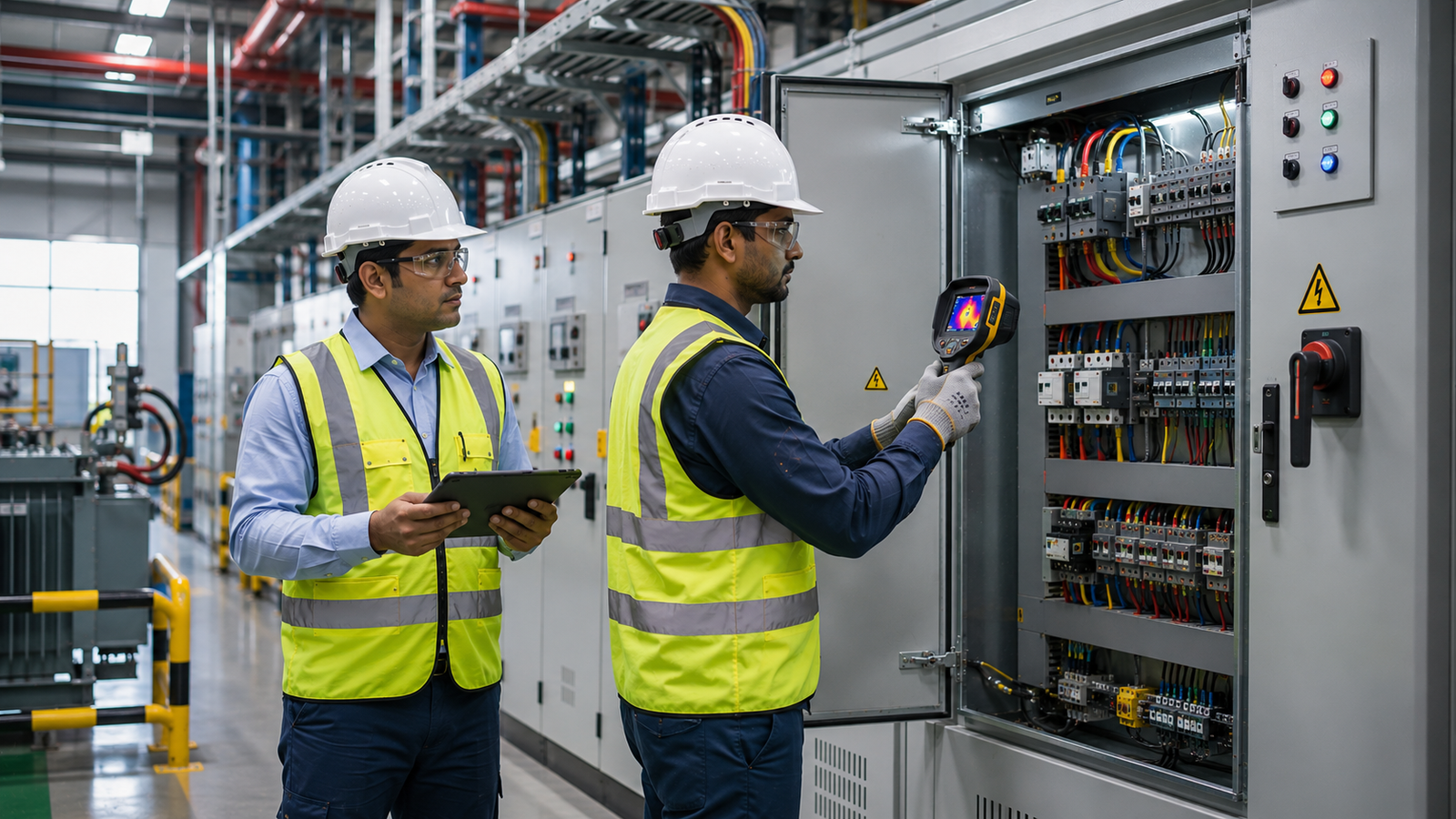
Electrical panels and switchgear
Wiring, cables, plugs, and connections
Earthing and bonding arrangements
Protective devices and circuit protection
Electrical fire and overheating risks
Electrical work and isolation practices
PPE, access control, and safety signage
Inspection, testing, and maintenance records
2. Key Audit Areas
Electrical panels and distribution boards
Switchgear and transformers
Motors and industrial machinery
Cable and wiring installations
Earthing and bonding systems
Circuit breakers and protective devices
Load and overloading conditions
Sockets, plugs, and extension cords
Generators and UPS systems
Temporary electrical installations
Electrical rooms and restricted areas
Electrical work practices and LOTO
Electrical PPE and warning signage
Documentation and maintenance records
3. Electrical Panel Inspection
The audit checks:
Panel condition and enclosure integrity
Accessibility and required clearance
Circuit identification and labelling
Signs of overheating or damage
Cable entry and termination condition
Protective devices and warning signs
Loose connections or unused openings
Housekeeping and access control
Keep electrical panels accessible, identified, protected, and maintained.
4. Electrical Fire Risks
Potential fire risks may include:
Overheating equipment
Overloaded circuits
Loose connections
Damaged insulation
Improper modifications
Excessive extension connections
Moisture exposure
Combustible materials near electrical equipment
Poor maintenance practices
Find the electrical fault before it becomes a fire hazard.
5. Earthing & Bonding
The audit may review:
Earthing arrangements
Earth continuity
Equipment grounding
Bonding connections
Earthing conductors
Identification of earthing points
Test and maintenance records
Testing, where required, should be carried out by competent personnel using suitable instruments.
6. Electrical Load & Protection
Key checks include:
Circuit loading conditions
Frequent breaker tripping
Hot cables or equipment
Overloaded sockets
Improvised connections
Protective-device suitability
Overcurrent and earth-fault protection
Surge protection where applicable
Excessive load can lead to overheating, equipment failure, and fire.
7. Cable & Wiring Inspection
The audit looks for:
Damaged cables
Exposed conductors
Poor insulation
Unsafe joints or repairs
Unsupported or poorly routed cables
Improper terminations
Temporary wiring
Mechanical damage
Missing cable identification
8. Electrical Isolation & LOTO
A typical isolation process includes:
01 — STOP
Stop the equipment safely.
02 — ISOLATE
Disconnect the energy source.
03 — LOCK & TAG
Apply approved isolation controls.
04 — VERIFY
Confirm that the equipment is in a safe condition.
05 — WORK
Carry out the task under the approved procedure.
06 — RESTORE
Restore energy only after required checks and authorisation.
Never assume a circuit is dead — verify before work begins.
9. Electrical Work Practices
The audit may review:
Competent and authorised personnel
Safe work procedures
Isolation and lockout practices
- Permit systems where applicable
- Risk assessments and JSA
Suitable PPE and tools
Test equipment
Barricading and warning signs
Emergency procedures
10. Electrical Room Safety
Key areas include:
Restricted access
Clear working space
No unnecessary material storage
Adequate lighting and ventilation
Protection from water or moisture
Electrical hazard signage
Emergency access
Fire protection arrangements
Electrical rooms should remain controlled, accessible, and free from unnecessary storage.
11. Documentation Review
Relevant documents may include:
Electrical drawings and single-line diagrams
Inspection and testing records
Earthing test reports
Maintenance records
Protective-device testing records
Generator and UPS records
Electrical work permits
LOTO procedures
Risk assessments
Training and authorisation records
Previous audit reports
Corrective-action records
12. Audit Methodology
01 — REVIEW
Review available documents, records, and procedures.
02 — INSPECT
Conduct a systematic inspection of electrical systems and equipment.
03 — IDENTIFY
Identify electrical shock, fire, equipment, and operational hazards.
04 — EVALUATE
Assess the significance and priority of identified findings.
05 — RECOMMEND
Provide practical corrective and preventive actions.
06 — REPORT
Document findings, observations, and recommendations.
07 — FOLLOW UP
Review corrective-action progress where included in the scope.
13. Risk Classification
Findings may be prioritised as:
01 — Critical
Immediate action required.
02 — High Priority
Significant deficiency requiring prompt correction.
03 — Medium Priority
Requires planned corrective action.
04 — Improvement Opportunity
Recommended measures to strengthen existing controls.
Final classification should be based on the specific installation, applicable requirements, and professional assessment.
14. Electrical Safety Audit Report
The report may include:
Executive summary
Scope and methodology
Detailed audit findings
Risk classification
Photographic evidence where applicable
Technical observations
Corrective recommendations
Priority actions
Suggested action plan
15. Facilities We Can Assess
Manufacturing facilities
Industrial premises
Corporate offices
Commercial buildings
Warehouses and logistics facilities
Healthcare facilities
Educational institutions
Hotels and hospitality facilities
Construction sites
Retail and shopping centres
Residential facilities
Data and technical facilities
16. Key Outcomes
An Electrical Safety Audit helps organisations:
Identify electrical hazards and fire risks
Improve installation and equipment safety
Review earthing and protection systems
Identify unsafe wiring and connections
Improve isolation and maintenance practices
Prioritise corrective actions
Strengthen electrical safety awareness
Support applicable safety requirements
Improve operational reliability
17. Why Conduct an Electrical Safety Audit?
01 — Identify Hidden Risks
Find electrical hazards before an incident occurs.
02 — Prevent Failures
Reduce the risk of shock, overheating, short circuits, and fire.
03 — Strengthen Controls
Improve protection, isolation, maintenance, and work practices.
04 — Prioritise Actions
Focus attention on the most significant findings.
05 — Improve Reliability
Support safer and more reliable electrical operations.
Electrical Safety Audit
Inspect Today. Prevent Tomorrow. Protect People & Property.
Professional assessment of electrical installations, panels, wiring, protection systems, earthing, work practices, fire risks, and electrical safety controls.