
Electrical Safety
Respect the Power. Control the Energy. Protect Every Life.
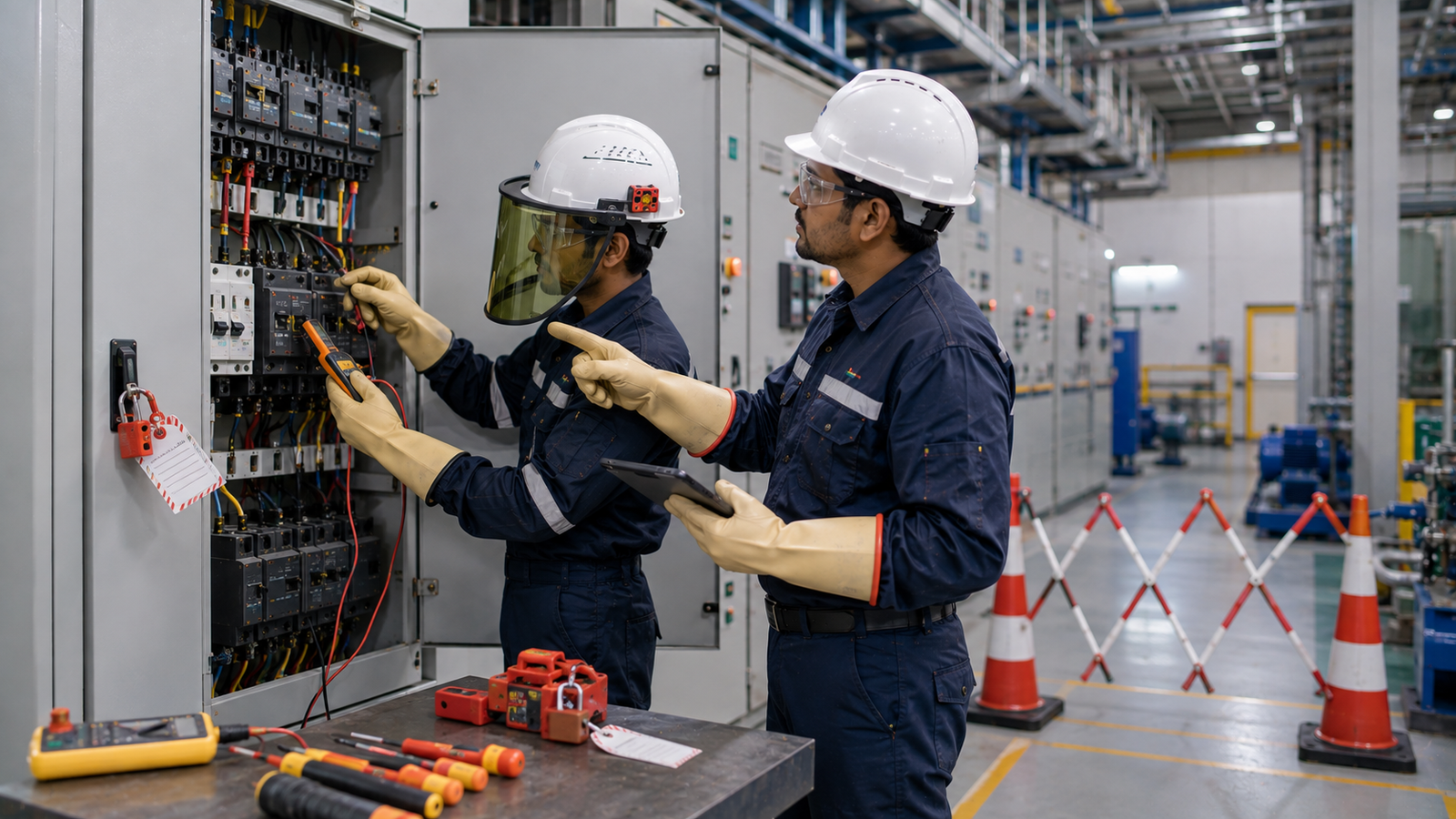
The Electrical Safety Course provides essential knowledge and practical awareness for workers, electricians, technicians, engineers, supervisors, and safety professionals working around electrical systems, equipment, and installations.
Participants learn to recognise electrical hazards, identify unsafe conditions, understand energy-isolation principles, and apply appropriate controls to reduce the risk of electric shock, burns, arc-flash incidents, electrical fires, and equipment-related accidents.
Through demonstrations, workplace scenarios, practical exercises, and interactive discussions, the course develops safer electrical work practices and responsible decision-making.
What You’ll Learn
Electrical Hazard Awareness
Understand common electrical hazards including electric shock, burns, short circuits, arc flash, exposed conductors, and faulty equipment.
Electrical Isolation
Understand why electrical energy must be properly isolated before applicable maintenance, repair, inspection, or intervention work.
Arc-Flash Awareness
Learn how arc-flash incidents can occur and the importance of appropriate procedures, boundaries, controls, and PPE.
Equipment Inspection
Recognise damaged cables, plugs, sockets, tools, panels, insulation, and other electrical defects.
Electrical PPE
Understand the importance of selecting task-appropriate PPE based on the identified electrical hazards.
Emergency Response
Develop awareness of appropriate responses to electrical shocks, fires, arc-flash events, equipment failures, and other emergencies.
Key Training Areas
Participants are introduced to:
Electrical safety fundamentals
Electric shock hazards
Electrical fire hazards
Arc-flash awareness
Arc-blast awareness
Electrical isolation
Lockout / Tagout awareness
Electrical equipment inspection
Safe use of electrical tools
Cables, plugs, sockets, and extension leads
Electrical panels and installations
Wet-area electrical hazards
Electrical PPE
Approach and restricted areas
Permit-to-work awareness
Electrical maintenance safety
Emergency response
Incident and near-miss reporting
Practical Electrical Safety Approach
Identify → Assess → Isolate → Verify → Protect → Work → Restore
Participants learn a structured approach to electrical safety:
01 — IDENTIFY THE HAZARD
Recognise electrical sources, exposed conductors, damaged equipment, moisture, overloaded circuits, and other potential risks.
02 — ASSESS THE RISK
Understand who may be exposed and the potential consequences.
03 — ISOLATE THE ENERGY
Apply the appropriate electrical isolation procedure before applicable work begins.
04 — VERIFY
Confirm that the electrical energy has been effectively isolated using approved procedures and appropriate equipment.
05 — PROTECT
Use required barriers, signage, tools, PPE, and other controls.
06 — PERFORM THE TASK
Carry out the work according to authorised procedures and within the person’s level of competence.
07 — RESTORE SAFELY
Follow the approved procedure before restoring electrical power.
Control the Energy Before You Begin the Work.
Electrical Isolation & Lockout / Tagout
Never Work on Energy You Have Not Properly Controlled
Participants develop awareness of basic electrical energy-isolation principles:
01 — IDENTIFY
Identify all relevant electrical energy sources.
↓
02 — SHUT DOWN
Stop the equipment according to the approved procedure.
↓
03 — ISOLATE
Disconnect or isolate the electrical supply.
↓
04 — LOCK & TAG
Apply approved isolation devices and identification.
↓
05 — VERIFY
Confirm that hazardous energy has been effectively isolated using the approved method.
↓
06 — WORK
Proceed only after the required controls have been verified.
Isolation Must Be Verified Before Applicable Work Begins.
Arc-Flash Awareness
Electrical Energy Can Release Extreme Heat and Force in Seconds
Participants learn about hazards associated with arc-flash events, including:
Electrical arc formation
Extreme heat
Pressure and blast effects
Molten metal and debris
Eye and face injuries
Hearing hazards
Clothing ignition
Secondary fires
The training emphasises the importance of risk assessment, electrical safety procedures, approach boundaries, equipment condition, authorised access, and task-specific protection.
Recognise the Energy. Establish the Boundary. Control the Exposure.
Electrical Equipment Inspection
Find the Defect Before It Becomes an Incident
Participants learn to recognise potential concerns such as:
Damaged cables
Exposed conductors
Cracked plugs
Damaged sockets
Loose connections
Overloaded extension leads
Damaged electrical tools
Missing covers
Defective switches
Damaged insulation
Signs of overheating
Unauthorised modifications
Water or moisture exposure
Do Not Use Damaged Electrical Equipment Until It Has Been Properly Assessed and Made Safe.
Electrical Safety PPE
Depending on the task, risk assessment, and applicable requirements, protection may include:
Safety helmet
Safety glasses
Face protection
Appropriate electrical protective gloves
Protective clothing
Suitable safety footwear
Hearing protection where required
Insulated tools where appropriate
Other task-specific electrical protection
PPE Is the Last Line of Defence — Control the Hazard First.
Electrical Work Area Control
Keep People Away From Electrical Hazards
Participants learn the importance of:
BARRIERS
Establish suitable physical controls where required.
WARNING SIGNS
Clearly communicate electrical hazards and restricted areas.
AUTHORISED PERSONNEL
Limit access to appropriately trained and authorised workers.
SAFE DISTANCES
Maintain applicable approach and restricted-area requirements.
ISOLATION
Prevent unexpected energisation where applicable.
Electrical Safety in Wet Conditions
Water and Electricity Create Additional Risk
Participants learn to recognise risks associated with:
Wet floors
Water leakage
Outdoor electrical equipment
Damaged insulation
Improper extension leads
Temporary electrical installations
Wet hands or clothing
Poorly protected electrical connections
When Conditions Change — Stop, Assess, and Make Safe.
Electrical Safety in Industrial Workplaces
Industrial and engineering environments may involve:
Machinery
Electrical motors, control systems, panels, automation, and production equipment.
Temporary Power
Extension leads, portable tools, temporary installations, and construction power.
Maintenance
Inspection, troubleshooting, repair, testing, and equipment isolation.
Hot Work
Electrical equipment operating near heat, sparks, or combustible materials.
Construction Activities
Electrical systems combined with work at height, excavation, lifting, temporary installations, and other hazards.
Different Workplaces. Different Hazards. One Principle — Control the Energy.
Emergency Response
Know What to Do When an Electrical Incident Occurs
Electric Shock
Do not approach or touch the affected person until the electrical hazard has been safely controlled. Follow established emergency procedures and obtain appropriate emergency assistance.
Electrical Fire
Raise the alarm, isolate electrical energy where safe and authorised, evacuate as required, and follow the site’s fire-response procedures.
Arc-Flash Event
Activate the emergency response, move away from the hazard when safe, and obtain immediate medical assistance for injuries.
Equipment Failure
Stop work, isolate the affected equipment where appropriate, secure the area, and report the condition.
Control the Hazard First. Protect People. Raise the Alarm.
Electrical Incident Reporting
Report the Hazard Before Someone Gets Hurt
Participants learn the importance of reporting:
Electric shocks
Arc-flash events
Electrical fires
Near misses
Damaged equipment
Exposed conductors
Repeated equipment failures
Unsafe temporary installations
Overheating or burning smells
Unsafe electrical practices
Every Incident and Near Miss Can Provide an Opportunity to Improve Safety.
Learning Outcomes
After completing the course, participants will be able to:
Understand fundamental electrical safety principles.
Identify common electrical hazards.
Recognise electric shock and burn risks.
Understand basic arc-flash hazards.
Identify unsafe electrical equipment and installations.
Understand the importance of electrical isolation.
Recognise basic Lockout / Tagout principles.
Understand the importance of verification before applicable work.
Apply appropriate electrical safety practices within their level of training.
Recognise when electrical equipment should be removed from service.
Understand barriers, signage, and restricted-access controls.
Select appropriate PPE based on the task and risk.
Respond appropriately to electrical emergencies.
Report electrical hazards, incidents, and near misses.
Support a stronger electrical safety culture.
Who Can Attend?
This course is suitable for:
Electricians • Electrical Technicians • Maintenance Personnel • Engineers • Machine Operators • Production Workers • Supervisors • Safety Officers • Facility Managers • Contractors • Construction Workers • Industrial Workers • Engineering Trainees
Training Approach
Learn → Identify → Isolate → Verify → Protect → Respond
The course combines:
Classroom Learning
Fundamental electrical safety concepts and hazard awareness.
Hazard Identification
Identifying electrical hazards in realistic workplace scenarios.
Isolation Exercises
Understanding electrical energy-isolation and verification principles.
Arc-Flash Awareness
Exploring electrical energy hazards and potential consequences.
PPE Awareness
Understanding task-specific electrical protection.
Emergency Scenarios
Discussing appropriate responses to electric shock, electrical fires, arc flash, and equipment failure.
Electrical Safety Cycle
Control the Energy Before It Controls You
01 — IDENTIFY
Locate electrical energy sources and potential hazards.
↓
02 — ASSESS
Understand the nature and level of electrical risk.
↓
03 — CONTROL
Apply appropriate engineering, administrative, and PPE controls.
↓
04 — ISOLATE
Control hazardous electrical energy where applicable.
↓
05 — VERIFY
Confirm the effectiveness of the isolation according to approved procedures.
↓
06 — WORK
Perform the task safely and within authorised limits.
↓
07 — MONITOR
Watch for changing conditions, defects, and unexpected hazards.
↓
08 — RESPOND
Act appropriately if an electrical emergency occurs.
↓
09 — IMPROVE
Learn from incidents, observations, and near misses.
Key Benefits
For Workers
Improve electrical hazard awareness and develop safer working habits.
For Electricians & Technicians
Strengthen electrical isolation, equipment inspection, and safe-work practices.
For Supervisors
Improve monitoring, communication, and control of electrical work activities.
For Safety Professionals
Strengthen electrical hazard identification, control, and compliance awareness.
For Organisations
Support safer electrical operations, reduce exposure to electrical hazards, and strengthen workplace safety culture.
Why Electrical Safety Matters
Electricity is essential to modern workplaces, but uncontrolled electrical energy can result in electric shock, burns, arc-flash injuries, fires, equipment damage, and fatalities.
Effective electrical safety training helps people recognise hazards, control energy, follow safe procedures, use appropriate protection, and respond effectively when something goes wrong.
Respect the Power. Control the Energy. Protect Every Life.
Electrical Safety
Identify the Hazard. Isolate the Energy. Work Safely.
Develop the practical knowledge and safety awareness required to recognise electrical hazards, control electrical energy, apply appropriate protection, and work safely around electrical systems and equipment.