
Emergency Preparedness & ERT
Prepare. Respond. Recover. Protect.
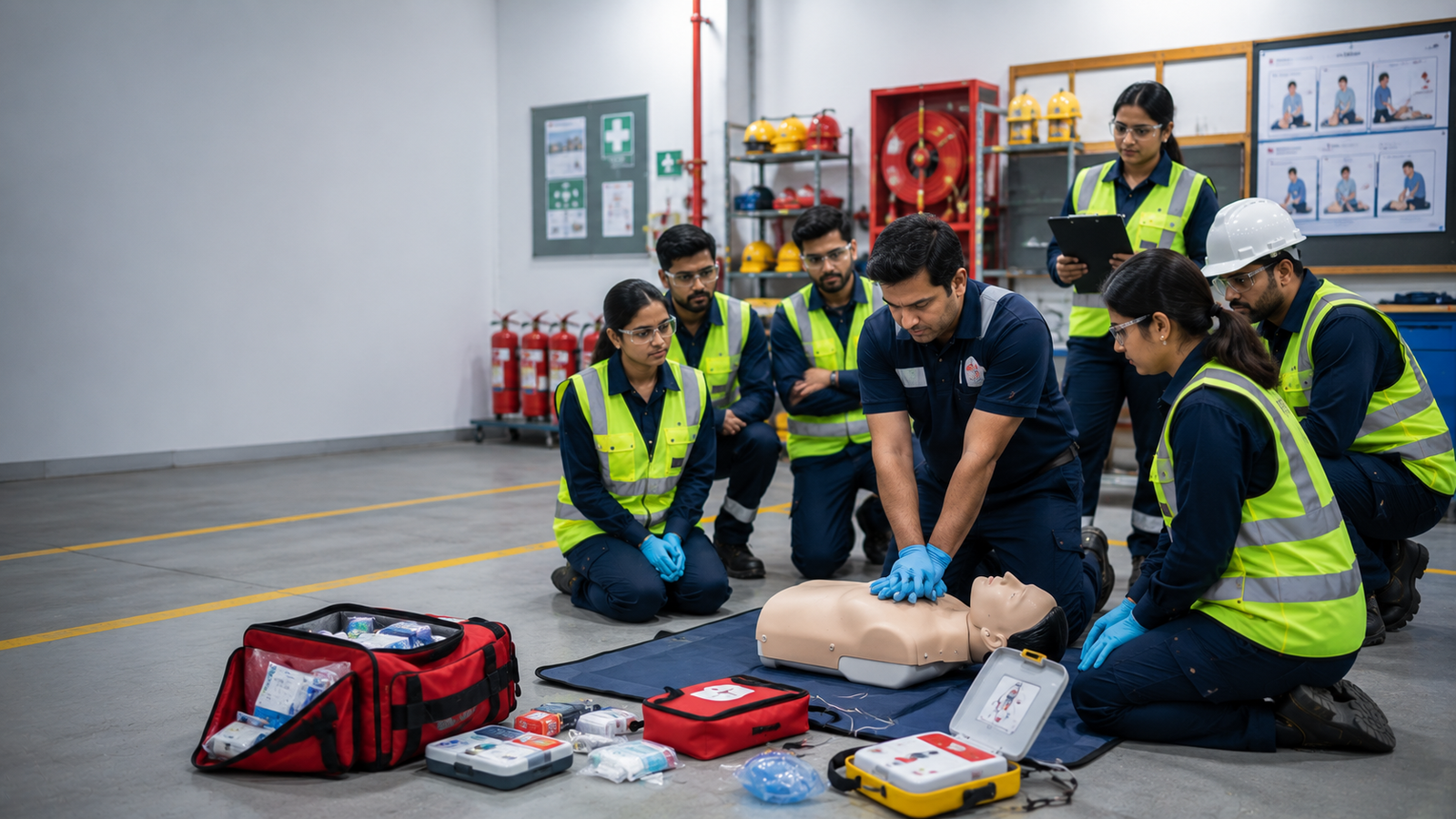
The Emergency Preparedness & Emergency Response Team (ERT) Course provides essential knowledge and practical understanding to help participants prepare for and respond effectively to workplace emergencies.
The training covers emergency planning, communication, evacuation, incident response, team coordination, and recovery procedures.
01. What You’ll Learn
01. Emergency Preparedness
Identifying potential emergency situations
Understanding emergency plans and procedures
Preparing resources and response arrangements
02. Emergency Response Team
Roles and responsibilities of ERT members
Team coordination during emergencies
Understanding individual response responsibilities
03. Emergency Response Planning
Basic elements of an emergency response plan
Emergency escalation procedures
Communication systems and available resources
04. Evacuation & Assembly
Safe evacuation procedures
Emergency exits and evacuation routes
Assembly point and headcount procedures
05. Emergency Communication
Emergency alarms and notifications
Reporting and communication procedures
Escalation and coordination protocols
06. Incident Response
Basic response to workplace emergencies
Personal safety during emergency situations
Coordinated team action
02. Key Training Areas
01. Emergency preparedness principles
02. Emergency Response Plans
03. ERT roles and responsibilities
04. Emergency alarm and notification systems
05. Emergency communication procedures
06. Fire emergency response
07. Evacuation procedures
08. Assembly point management
09. Personnel accountability and headcount
10. First-response awareness
11. Emergency equipment awareness
12. Electrical emergency awareness
13. Hazardous material emergency awareness
14. Natural and workplace emergency scenarios
15. Emergency drill evaluation
16. Recovery and continuity awareness
03. ERT Roles & Responsibilities
Every Second Counts. Every Role Matters.
01. ERT Leader
Coordinates the emergency response, communication, and team activities.
02. Fire Response Team
Supports initial fire response within the limits of training, available equipment, and site procedures.
03. Evacuation Team
Guides personnel towards safe exits and designated assembly areas.
04. First Response Team
Provides initial assistance and supports coordination with professional responders.
05. Communication Team
Supports emergency notifications, internal communication, and escalation procedures.
06. Accountability Team
Supports headcount procedures and identifies missing or unaccounted personnel.
04. Practical Emergency Training
Participants receive practical exposure to:
01. Emergency alarm procedures
02. Emergency communication exercises
03. Evacuation and emergency exit procedures
04. Assembly point management
05. Headcount and personnel accountability
06. Simulated fire emergency response
07. Emergency equipment awareness
08. Basic first-response awareness
09. ERT team coordination
10. Emergency drill evaluation
05. Emergency Response Cycle
A Structured Approach to Emergency Management
01. Prepare
Identify potential emergencies, establish procedures, assign responsibilities, and prepare resources.
↓
02. Alert
Recognise the emergency and activate appropriate alarm and notification procedures.
↓
03. Respond
Activate the ERT and begin the appropriate response.
↓
04. Evacuate
Guide personnel through designated evacuation routes to safe assembly areas.
↓
05. Account
Conduct headcounts and identify missing or unaccounted personnel.
↓
06. Coordinate
Work with internal teams and external emergency services as required.
↓
07. Recover
Support reporting, evaluation, recovery, and improvement after the emergency.
06. Emergency Scenario Training
01. Fire Emergency
Alarm activation, initial response, evacuation, assembly, and coordination.
02. Electrical Emergency
Recognition of electrical hazards and initiation of appropriate emergency procedures.
03. Chemical or Hazardous Material Incident
Initial response, area isolation, notification, and safe evacuation principles.
04. Medical Emergency
Emergency notification, initial assistance, and coordination with professional responders.
05. Natural Emergency
Preparedness and response principles for events such as earthquakes, severe weather, or similar emergencies.
06. Workplace Incident
Communication, response coordination, evacuation, accountability, and escalation procedures.
07. Learning Outcomes
After completing the course, participants will be able to:
01. Understand the principles of emergency preparedness.
02. Recognise potential workplace emergencies.
03. Understand the structure and responsibilities of an ERT.
04. Follow established emergency response procedures.
05. Respond appropriately to emergency alarms and notifications.
06. Support safe and orderly evacuation.
07. Assist with assembly and personnel accountability.
08. Understand emergency communication and escalation procedures.
09. Work effectively as part of an emergency response team.
10. Participate in emergency drills and simulations.
11. Identify gaps in emergency preparedness.
12. Support continuous improvement of emergency response arrangements.
08. Who Can Attend?
01. ERT Members
02. Safety Officers
03. Fire & Safety Personnel
04. Fire Wardens
05. Supervisors
06. Managers
07. Security Personnel
08. Facility Teams
09. Industrial Personnel
10. Emergency Coordinators
11. School & College Staff
12. Students & Safety Trainees
09. Training Approach
Understand → Prepare → Practice → Respond → Evaluate
The training combines essential concepts with demonstrations, emergency scenarios, team exercises, simulations, and mock-drill activities.
10. Emergency Preparedness Assessment
Are You Ready When It Matters?
01. Plans
Are emergency procedures clearly defined?
02. People
Are responsibilities assigned and team members adequately prepared?
03. Systems
Are alarms, communication systems, and emergency arrangements understood?
04. Evacuation
Are evacuation routes and assembly procedures clear?
05. Equipment
Are essential emergency resources available and accessible?
06. Communication
Can important information be communicated quickly and effectively?
07. Drills
Are emergency procedures regularly tested and evaluated?
11. Why Emergency Preparedness Matters
Effective preparedness helps organisations:
01. Prepare people for potential emergencies.
02. Establish clear roles and responsibilities.
03. Improve communication and coordination.
04. Support safe evacuation and accountability.
05. Strengthen overall emergency response capabilities.
Prepared Teams. Faster Response. Safer Outcomes.
Emergency Preparedness & ERT
Preparedness. Teamwork. Coordinated Response.