
Gas Cutting & Hot Work Training
Control the Flame. Prevent the Fire. Work Safely.
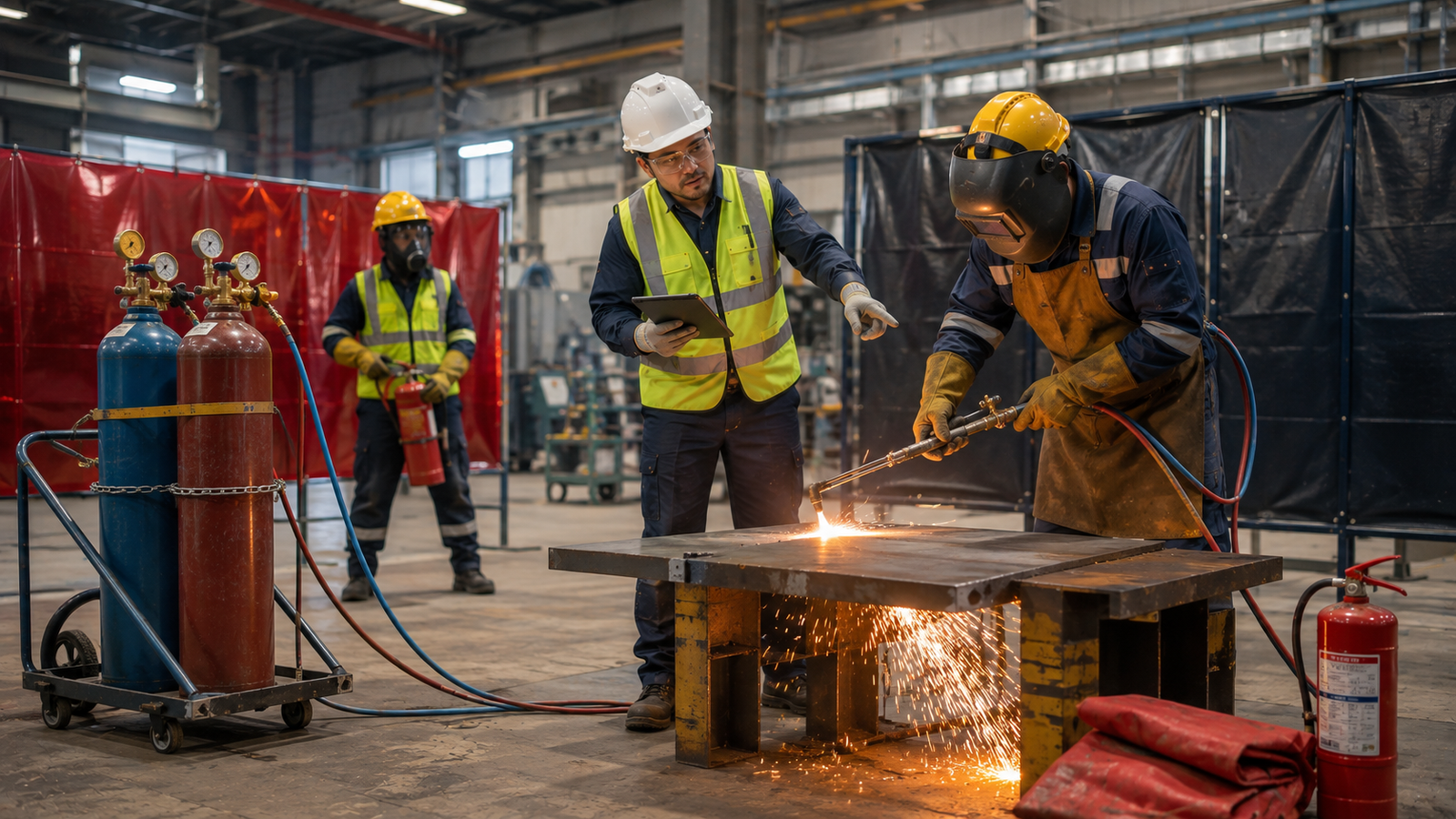
The Gas Cutting & Hot Work Training Course provides essential knowledge and practical awareness for carrying out gas cutting and other hot-work activities safely.
Participants learn about hot-work hazards, gas-cylinder safety, equipment inspection, fire prevention, permit requirements, PPE, fire watch and emergency response.
1. What You’ll Learn
1.1 Hot Work Safety
Gas cutting and related hot-work activities
Heat, sparks and flame hazards
Safe work practices
1.2 Fire & Explosion Prevention
Combustible materials
Flammable atmospheres
Ignition sources
Hidden fire hazards
1.3 Gas Cylinder Safety
Cylinder identification
Safe handling and transportation
Positioning and storage
Basic inspection requirements
1.4 Cutting Equipment
Cutting torches
Hoses and connections
Regulators
Flashback protection and safety devices
1.5 Hot Work Permit
Permit requirements
Pre-work checks
Work-area controls
Authorisation procedures
1.6 PPE & Personal Protection
Eye and face protection
Protective clothing
Gloves and footwear
Other task-specific PPE
2. Key Training Areas
Gas cutting safety
Hot-work hazards
Cutting equipment awareness
Gas-cylinder identification and handling
Hoses and connections
Regulators and associated equipment
Fire and explosion prevention
Fire extinguisher readiness
Backfire and flashback awareness
Hot-work permit procedures
Pre-work area inspection
Combustible-material control
Work-area control and barricading
Hot-work PPE
Ventilation and atmospheric hazards
Fire-watch awareness
Emergency response
Incident and near-miss reporting
3. Practical Gas Cutting Training
Prepare the Area. Check the Equipment. Control the Risk.
3.1 Inspect the Work Area
Identify combustible materials
Check for flammable substances
Consider nearby openings and hidden spaces
Assess ventilation and surrounding hazards
3.2 Check Equipment
Gas cylinders
Hoses and connections
Regulators
Cutting torch
Safety devices
3.3 Secure Gas Cylinders
Safe positioning
Proper securing
Protection from damage and heat
Suitable handling practices
3.4 Prepare the Work
Permit requirements
Area isolation
Barricading
Ventilation
PPE and fire protection
3.5 Conduct Hot Work
Follow approved work procedures
Maintain control of the work area
Monitor changing conditions
3.6 Maintain Fire Watch
Monitor the work area where required
Check adjacent and concealed areas
Identify signs of fire or smouldering materials
3.7 Close the Job Safely
Shut down equipment
Handle and store equipment safely
Inspect the work area
Complete required post-work monitoring
4. Fire Prevention & Hot Work
A Spark Can Travel Further Than You Think
01. COMBUSTIBLE MATERIALS
Remove, isolate or adequately protect materials that could ignite.
02. FLAMMABLE ATMOSPHERES
Identify the presence of vapours, gases or other hazardous atmospheres.
03. OPENINGS & HIDDEN SPACES
Check areas where sparks or heat may travel through floors, ducts, openings or gaps.
04. NEARBY WORK AREAS
Consider materials and activities on adjacent or opposite sides of walls and partitions.
05. FIRE WATCH
Monitor for signs of fire during and after hot work as required.
5. Gas Cylinder Safety
Handle Every Cylinder With Care
Participants learn about:
Correct cylinder identification
Safe transportation and movement
Upright positioning and securing
Valve protection
Appropriate storage
Cylinder separation and compatibility
Hose and connection inspection
Regulator safety
Leak awareness
Protection from heat and physical damage
Safe shutdown procedures
Damaged or Suspect Equipment Must Not Be Used.
6. Flashback & Backfire Awareness
Understand the Risk Before Lighting the Torch
01. BACKFIRE
An abnormal flame event involving the torch that may produce a sudden sound or flame condition.
02. FLASHBACK
A more serious condition in which flame can travel back into the equipment or gas system.
Participants learn the importance of:
Suitable equipment and setup
Pre-use inspection
Appropriate safety devices
Correct operating procedures
Immediate action according to approved site procedures
7. Hot Work Permit
No Permit. No Hot Work — Where a Permit Is Required.
Before starting work, confirm:
01. WORK LOCATION
Identify where the hot work will take place.
02. HAZARDS
Identify combustible, flammable and other hazards.
03. FIRE PROTECTION
Confirm suitable fire-protection arrangements.
04. AREA CONTROL
Ensure the work area is isolated or adequately controlled.
05. PPE
Confirm appropriate PPE is available and correctly used.
06. FIRE WATCH
Determine whether monitoring is required during and after the work.
07. AUTHORISATION
Confirm the required permit or approval has been obtained.
8. Fire Watch
The Job Is Not Finished When the Flame Goes Out
Where required, fire-watch personnel monitor the work area for signs of fire or smouldering materials.
Key responsibilities include:
Monitoring the work area during hot work
Checking adjacent and concealed areas
Keeping suitable fire-fighting equipment accessible
Reporting unsafe conditions immediately
Following site-specific fire-watch requirements
Completing post-work monitoring for the required period
9. PPE & Personal Protection
Participants develop awareness of:
Safety goggles
Face shields
Heat-resistant gloves
Protective clothing
Safety footwear
Head protection
Respiratory protection where required
Hearing protection where required
PPE Must Match the Hazard and the Task.
10. Emergency Response
Know What to Do When Something Goes Wrong
10.1 Fire
Raise the alarm, stop work where safe and follow emergency procedures.
10.2 Flashback or Equipment Failure
Follow approved shutdown procedures and control the affected area.
10.3 Gas Leak
Raise the alarm, avoid ignition sources and follow site emergency procedures.
10.4 Small Fire
Only trained and authorised personnel should attempt an initial response when safe to do so.
10.5 Major Emergency
Stop work, evacuate as required and follow the site emergency response plan.
11. Learning Outcomes
After completing the course, participants will be able to:
Understand basic gas cutting and hot-work safety principles.
Identify common hot-work hazards.
Recognise fire and explosion risks.
Understand basic gas-cylinder safety requirements.
Identify common cutting equipment and associated hazards.
Conduct basic pre-use safety checks within their level of training.
Understand the importance of hot-work permits.
Apply basic fire-prevention principles.
Understand the role of fire-watch personnel.
Select suitable PPE for hot-work activities.
Recognise unsafe conditions and stop work when required.
Understand appropriate emergency-response procedures.
Report equipment defects, incidents and near misses.
Support safer hot-work operations.
12. Who Should Attend?
Suitable for:
Gas Cutters
Welders
Fabricators
Maintenance Personnel
Construction Workers
Hot Work Operators
Safety Officers
Site Supervisors
Fire & Safety Personnel
Fire Watch Personnel
Engineers
Contractors
Industrial Workers
Safety Trainees
13. Training Approach
Understand → Inspect → Prepare → Protect → Work → Monitor
The programme combines:
01. Classroom Learning
Basic hot-work safety principles and control measures.
02. Practical Demonstrations
Equipment checks and safe work practices.
03. Hazard Identification
Recognition of fire, explosion and equipment-related hazards.
04. Work Scenarios
Practical hot-work planning and control exercises.
05. Emergency Awareness
Understanding appropriate actions during abnormal or emergency conditions.
Practical gas-cutting activities should be carried out using suitable equipment and under the supervision of appropriately trained and competent personnel.
14. Hot Work Safety Cycle
Control Every Stage of the Job
01. PLAN
Understand the task, location, equipment and hazards.
02. INSPECT
Check the work area, cylinders, hoses, regulators, torch and safety equipment.
03. CONTROL
Remove or protect combustible materials and establish work-area controls.
04. AUTHORISE
Complete the required permit and approval process.
05. PROTECT
Use appropriate PPE and ensure suitable fire-protection arrangements.
06. WORK
Carry out the task according to approved procedures.
07. MONITOR
Maintain required fire watch and monitor surrounding areas.
08. CLOSE
Shut down equipment safely and inspect the area after completion.
15. Key Benefits
For Workers
Improve hot-work awareness, equipment safety and fire-prevention practices.
For Supervisors
Strengthen work planning, permit control, hazard identification and monitoring.
For Organisations
Support safer hot-work operations, reduce fire risks and strengthen workplace safety practices.
16. Why Gas Cutting & Hot Work Training Matters
Gas cutting and hot-work activities introduce heat, sparks and ignition sources into the workplace. Without proper planning and control, these activities can create serious fire and explosion risks.
Effective training helps workers:
Identify hazards before starting work
Inspect equipment and the work area
Control combustible materials
Follow permit requirements
Use appropriate PPE
Maintain required fire watch
Respond appropriately to emergencies
Control the Flame. Control the Risk. Prevent the Fire.
Gas Cutting & Hot Work Training
Practical Hot Work Safety Training
Develop the knowledge and practical awareness required to plan, prepare, perform and monitor gas cutting and hot-work activities safely.