
Personal Protective Equipment (PPE)
Select Correctly. Wear Properly. Work Safely.
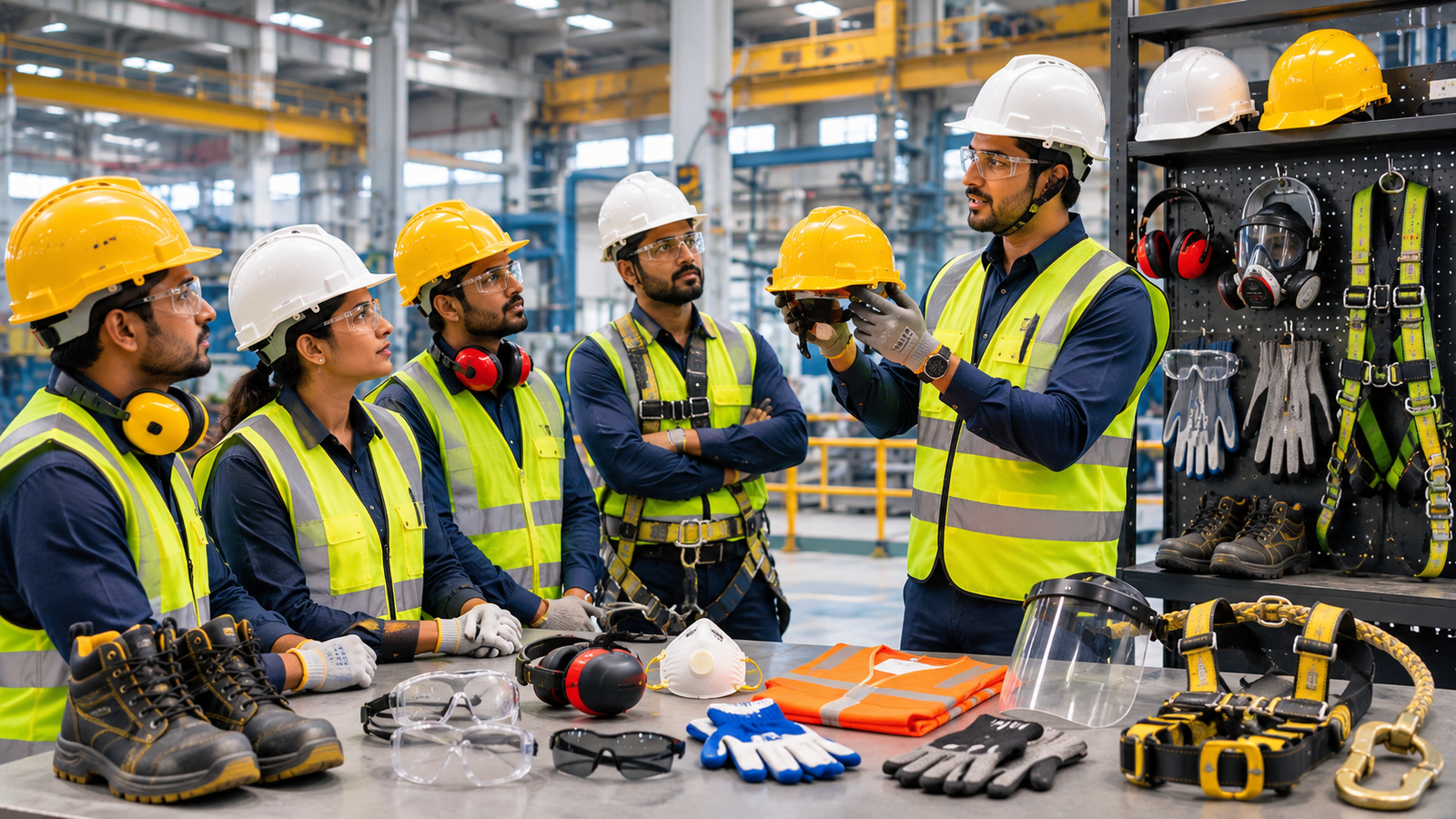
The PPE Course provides essential knowledge on selecting, inspecting, using and maintaining personal protective equipment. Participants learn to identify workplace hazards, select suitable PPE and understand its correct use and limitations.
1. What You’ll Learn
1.1 Head Protection
Safety helmet requirements
Correct fitting and adjustment
Inspection and maintenance
1.2 Eye & Face Protection
Safety glasses and goggles
Face shields
Hazard-based selection
1.3 Hearing Protection
Noise-related hazards
Earplugs and earmuffs
Correct fitting and care
1.4 Respiratory Protection
Respiratory hazards
Suitable respiratory protective equipment
Correct use and limitations
1.5 Hand Protection
Protective gloves
Cut, chemical, heat and abrasion hazards
Selection and proper use
1.6 Foot Protection
Safety footwear
Hazard-based selection
Inspection and maintenance
2. Key PPE Categories
Participants are introduced to:
Safety helmets
Safety glasses and goggles
Face shields
Earplugs and earmuffs
Respiratory protective equipment
Protective gloves
Safety footwear
High-visibility clothing
Fall-protection equipment
Protective clothing
Heat and fire-resistant PPE
Chemical-resistant PPE
Electrical protective equipment
3. PPE Selection
The Right PPE for the Right Hazard
PPE should be selected according to the task, workplace hazards and applicable requirements.
01. HAZARD
Identify what can cause injury or exposure.
02. RISK
Understand the potential severity of harm.
03. PROTECTION
Select suitable PPE for the identified hazard.
04. FIT
Ensure the equipment fits the user correctly.
05. CONDITION
Check that PPE is clean, functional and undamaged.
06. USE
Ensure PPE is worn and used correctly.
4. Practical PPE Training
Identify. Select. Inspect. Wear. Maintain.
4.1 Identify Hazards
Recognise workplace hazards requiring personal protection.
4.2 Select PPE
Match PPE to the task and identified hazard.
4.3 Inspect PPE
Check for damage, wear, contamination and defects.
4.4 Wear Correctly
Practise correct fitting, adjustment and use.
4.5 Maintain PPE
Understand cleaning, storage and maintenance requirements.
4.6 Replace When Required
Recognise damaged, contaminated, expired or unsuitable PPE and remove it from service.
5. PPE Inspection
Check PPE Before Use
Look for:
Cracks, cuts, tears or deformation
Broken or missing components
Excessive wear
Damaged straps or fasteners
Contamination
Poor fit or adjustment
Damaged lenses or shields
Worn soles or damaged footwear
Defective connectors or attachment points
Signs that PPE has reached the end of its service life
Damaged PPE Must Not Be Used.
6. Fall Protection PPE
Use the Right Equipment for the Task
Participants develop awareness of:
Full-body harnesses
Lanyards
Connectors
Lifelines
Energy-absorbing systems
Anchorage requirements
Pre-use inspection
Safe storage and care
Equipment limitations
Fall-protection equipment should be selected and used according to applicable requirements, manufacturer instructions and approved work procedures.
7. PPE Limitations
PPE Is the Last Line of Defence
PPE should support, not replace, effective hazard-control measures.
The preferred control approach is:
01. Eliminate
Remove the hazard where reasonably practicable.
02. Substitute
Replace the hazard with a safer alternative where possible.
03. Engineering Controls
Use physical controls to isolate people from hazards.
04. Administrative Controls
Use procedures, training, signage and supervision.
05. PPE
Use suitable personal protection for remaining risks.
8. Learning Outcomes
After completing the course, participants will be able to:
Understand the purpose and importance of PPE.
Identify workplace hazards requiring personal protection.
Recognise different PPE categories.
Select suitable PPE for common workplace hazards.
Conduct basic pre-use PPE inspections.
Wear and adjust PPE correctly.
Understand PPE maintenance, storage and care.
Recognise damaged or unsuitable PPE.
Understand the limitations of PPE.
Follow workplace PPE requirements and procedures.
Report PPE defects and safety concerns.
Support safer workplace practices.
9. Who Should Attend?
Suitable for:
Construction Workers
Industrial Workers
Safety Officers
Site Supervisors
Maintenance Personnel
Engineers
Machine Operators
Fire & Safety Personnel
Emergency Response Team Members
Security Personnel
Contractors
Facility Teams
Safety Trainees
10. Training Approach
Identify → Select → Inspect → Wear → Maintain → Replace
The programme combines:
01. Safety Awareness
Basic PPE requirements and workplace practices.
02. Practical Demonstrations
Correct selection, fitting and use of PPE.
03. PPE Identification
Understanding different types of protective equipment.
04. Inspection Activities
Identifying damaged or unsuitable PPE.
05. Workplace Scenarios
Applying PPE selection and use to practical situations.
11. PPE Safety Cycle
Make PPE Part of Every Safe Task
01. IDENTIFY
Understand the hazards associated with the task.
02. SELECT
Choose PPE suitable for the identified risks.
03. INSPECT
Check PPE condition before use.
04. WEAR
Put on and adjust PPE correctly.
05. MAINTAIN
Clean, store and care for PPE as required.
06. REPLACE
Remove damaged or unsuitable PPE from service.
07. REPORT
Report defects, shortages and PPE-related safety concerns.
12. Key Benefits
For Workers
Improve PPE awareness, correct usage and personal protection practices.
For Supervisors
Strengthen PPE compliance, workplace monitoring and safety communication.
For Organisations
Support better hazard control, reduce exposure to workplace risks and promote a stronger safety culture.
13. Why PPE Training Matters
PPE provides an important layer of protection when hazards cannot be fully eliminated or controlled through other measures.
Effective protection depends on selecting the right equipment, ensuring proper fit, inspecting it before use, maintaining it correctly and using it consistently.
Right PPE. Right Fit. Right Use.
Personal Protective Equipment (PPE)
Practical PPE Awareness & Safe-Use Training
Develop the knowledge and practical skills required to select, inspect, wear, maintain and use personal protective equipment effectively in the workplace.