
Work at Height
Work Above. Stay Protected. Go Home Safe.
The Work at Height Course provides essential knowledge and practical awareness for personnel working where there is a risk of falling from height.
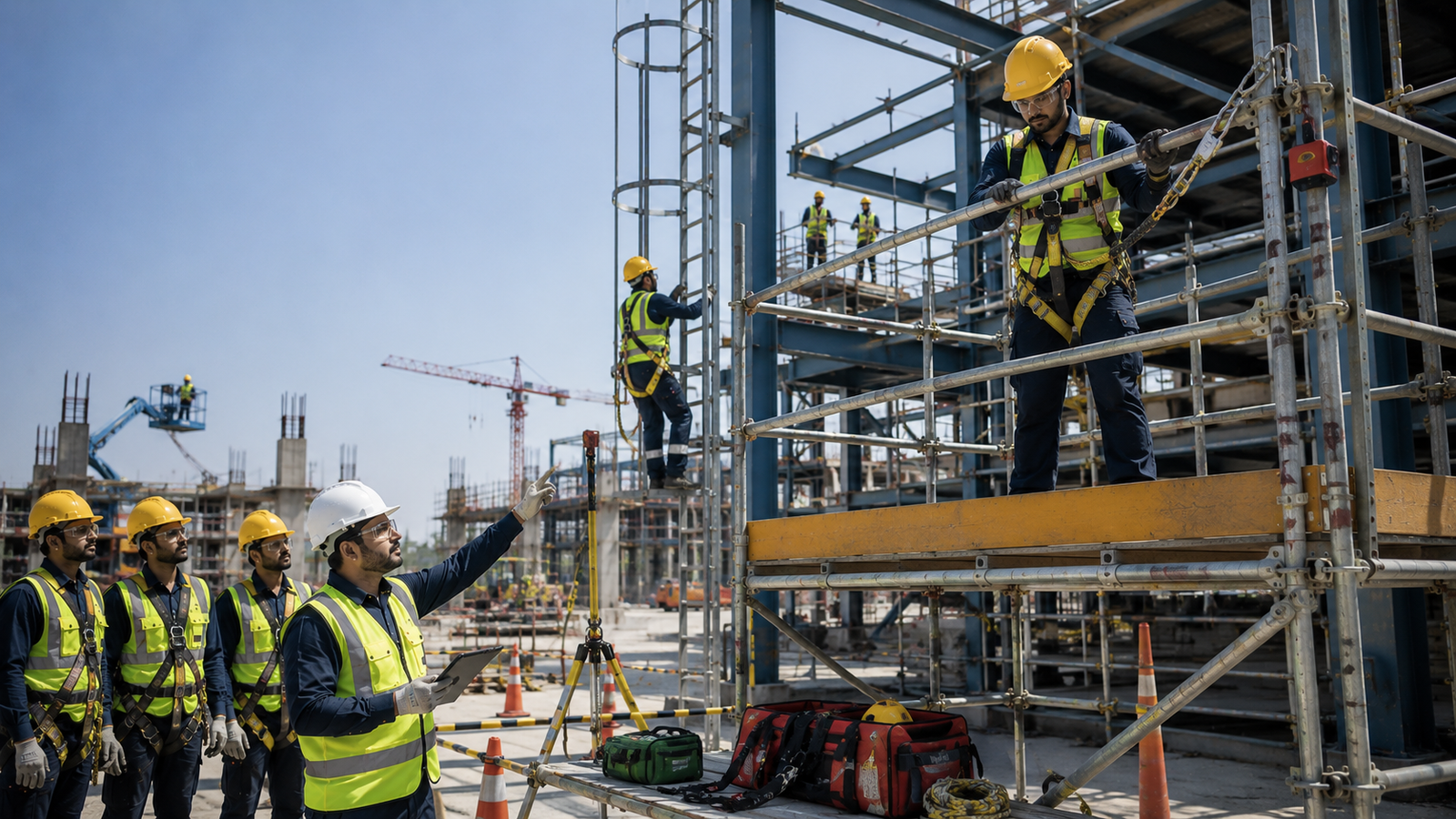
The training covers fall hazards, safe access, fall prevention, protective equipment, work planning, and emergency awareness.
01. What You’ll Learn
01. Work-at-Height Hazards
Common fall hazards
Unsafe access and elevated work areas
Risks associated with ladders, scaffolds, platforms, and roofs
02. Fall Prevention
Reducing or eliminating fall risks
Safe access and working methods
Edge protection and suitable work platforms
03. Fall Protection Systems
Harness and lanyard awareness
Lifelines and anchor points
Basic use of approved fall-protection systems
04. PPE & Safety Equipment
Selection of appropriate equipment
Basic pre-use inspection
Proper use and maintenance
05. Safe Work Planning
Risk assessment and hazard identification
Safe work procedures and permits
Pre-work checks and emergency arrangements
06. Rescue & Emergency Response
Emergency communication
Basic rescue awareness
Importance of a suitable rescue plan
02. Key Training Areas
01. Work-at-height hazard identification
02. Risk assessment and hazard control
03. Fall prevention principles
04. Fall arrest and protection awareness
05. Full-body harness awareness
06. Lanyards and connecting systems
07. Anchor points and lifelines
08. Ladder safety
09. Scaffold and platform safety
10. Roof and fragile-surface safety
11. Edge protection and barricading
12. Tools and material handling at height
13. Weather and environmental considerations
14. Emergency and rescue planning
15. Pre-use inspection and reporting
03. Practical Work-at-Height Training
Learn the Right Way to Work Above Ground Level
01. Identify Hazards
Recognise fall hazards, unsafe access, openings, edges, fragile surfaces, and changing site conditions.
02. Plan the Work
Understand risk assessment, equipment selection, safe procedures, and emergency planning.
03. Inspect Equipment
Learn basic pre-use inspection principles for harnesses, lanyards, connectors, ladders, and other equipment.
04. Use Protection Systems
Understand the correct principles for using approved fall-protection systems under competent supervision.
05. Work Safely
Apply safe movement, positioning, housekeeping, and tool-control practices.
06. Respond to Emergencies
Understand emergency communication procedures and the importance of a planned rescue response.
04. Fall Prevention & Protection
Prevent the Fall Before You Have to Stop It
01. Avoid
Avoid working at height wherever the task can safely be completed from ground level.
↓
02. Prevent
Use suitable platforms, guardrails, scaffolds, and other measures to prevent falls.
↓
03. Protect
Where fall risks remain, use appropriate fall-protection systems according to approved procedures.
↓
04. Rescue
Ensure suitable emergency and rescue arrangements are established before work begins
05. Equipment Safety
Check Before You Climb
Participants learn to check relevant equipment for:
01. Signs of damage or excessive wear
02. Cuts, tears, burns, or deterioration
03. Damaged connectors or hardware
04. Defective ladders or access equipment
05. Missing components
06. Unsuitable or unauthorised equipment
07. Improper storage or maintenance
08. Expired or rejected equipment where applicable
If Equipment Is Unsafe — Do Not Use It. Report It.
06. Emergency & Rescue Awareness
Every Height-Work Plan Needs an Emergency Plan
01. Communication
Know how an emergency will be reported and assistance requested.
02. Response
Understand how emergency response procedures should be activated.
03. Rescue
Ensure a suitable rescue arrangement is considered before work begins.
04. Team Coordination
Understand the roles of workers, supervisors, and emergency personnel.
05. Reporting
Report incidents, near misses, equipment concerns, and unsafe conditions.
07. Learning Outcomes
After completing the course, participants will be able to:
01. Identify common work-at-height hazards.
02. Understand basic fall-prevention and protection principles.
03. Recognise unsafe working conditions at height.
04. Understand appropriate access and work-at-height equipment.
05. Carry out basic pre-use safety checks within their level of training.
06. Understand the purpose of harnesses and fall-protection systems.
07. Follow safer ladder, scaffold, platform, and elevated-work practices.
08. Understand the importance of risk assessment and safe work planning.
09. Maintain safe housekeeping while working at height.
10. Recognise the importance of emergency and rescue planning.
11. Report unsafe conditions, incidents, and near misses.
08. Who Can Attend?
01. Construction Workers
02. Scaffolders
03. Site Supervisors
04. Safety Officers
05. Maintenance Personnel
06. Engineers
07. Contractors
08. Facility Teams
09. Roof Workers
10. Industrial Workers
11. Work-at-Height Personnel
12. Safety Trainees
09. Training Approach
Understand → Plan → Inspect → Protect → Practise → Respond
The course combines theoretical learning, practical demonstrations, hazard-identification exercises, equipment awareness, and work-at-height scenarios.
10. Work-at-Height Safety Cycle
A Safer Approach to Every Elevated Task
01. Identify
Recognise the hazards and determine whether working at height can be avoided.
↓
02. Plan
Assess risks, select suitable equipment, define safe procedures, and establish emergency arrangements.
↓
03. Protect
Implement appropriate fall-prevention and fall-protection measures.
↓
04. Inspect
Check access equipment and safety systems before use.
↓
05. Work
Carry out the task using approved procedures and safe practices.
↓
06. Monitor
Remain alert to changing conditions, weather, hazards, and equipment issues.
↓
07. Respond
Activate emergency and rescue procedures when required.
11. Key Benefits
01. For Workers
Improves hazard recognition and develops safer work-at-height practices.
02. For Supervisors
Supports better work planning, monitoring, and hazard control.
03. For Organisations
Helps strengthen fall-prevention practices and improve overall safety awareness.
12. Why Work-at-Height Training Matters
Working at height can expose personnel to serious fall hazards. Proper planning, suitable equipment, safe procedures, and effective supervision are essential for reducing these risks.
Training helps workers recognise hazards, choose safer working methods, use protective systems correctly, and respond appropriately when conditions change.
Plan the Work. Control the Risk. Prevent the Fall.
Work at Height
Hazard Awareness. Proper Protection. Safer Work at Height.